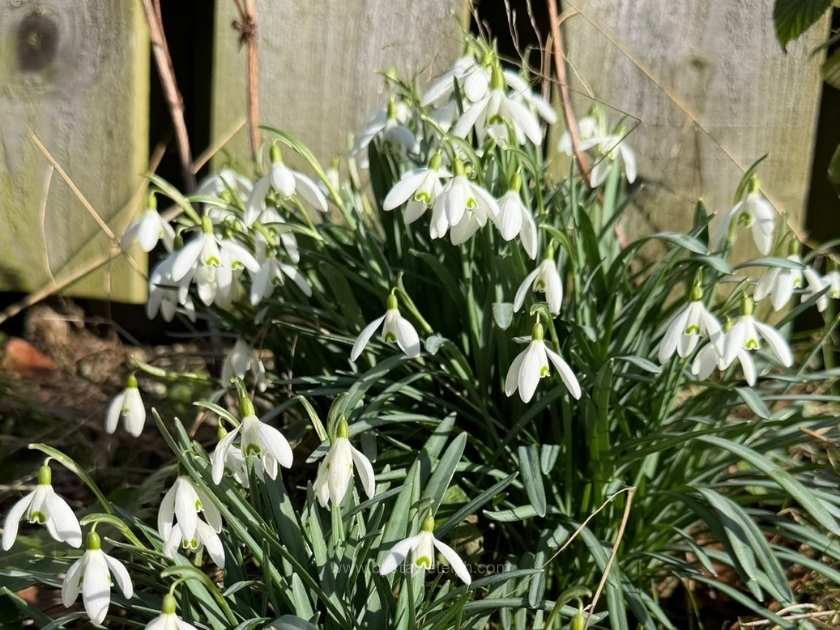
Scotland doesn’t do gradual. Winter holds on longer than anywhere else, grey and heavy, and then one morning my sister steps outside and there are snowdrops. Dozens of them. White bells nodding against a weathered wooden fence, green shoots pushing through cold soil that looked dead a week ago.
She sent me the photo before she’d had her morning coffee. No caption. Just the image.
This is what early spring looks like in a scottish spring garden, not a gradual warming, but a series of small announcements. Snowdrops first. Then crocuses. Then the camellia on the corner that stops everyone in March.
What a Scottish spring garden actually looks like
Spring in Aberdeen arrives later than most of Britain. The northeast sits exposed to the North Sea and winter lingers in the wind long after the calendar says otherwise. When flowers finally come they feel earned.
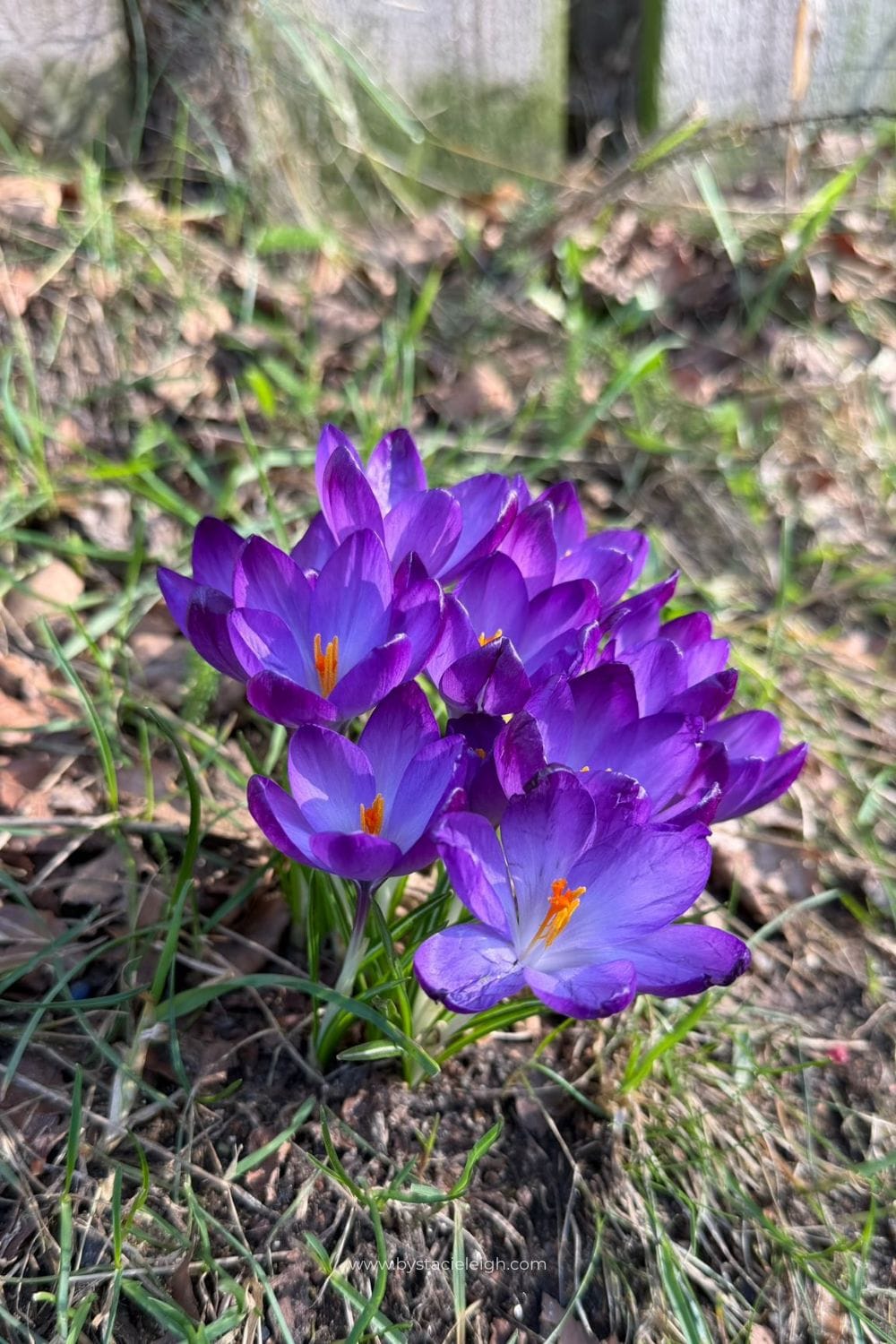
Lori’s garden shows what that looks like in practice. The purple crocuses came up beside the fence line, deep violet Crocus vernus with orange stamens that catch the light on a clear morning. Not planted in neat rows. Just appearing where they always appear, because bulbs in a Scottish garden have their own memory.
The colour is more saturated than you expect from a country associated with grey. Scotland in spring is vivid in a way that feels almost surprising, like the landscape is making up for lost time.
The stone wall detail
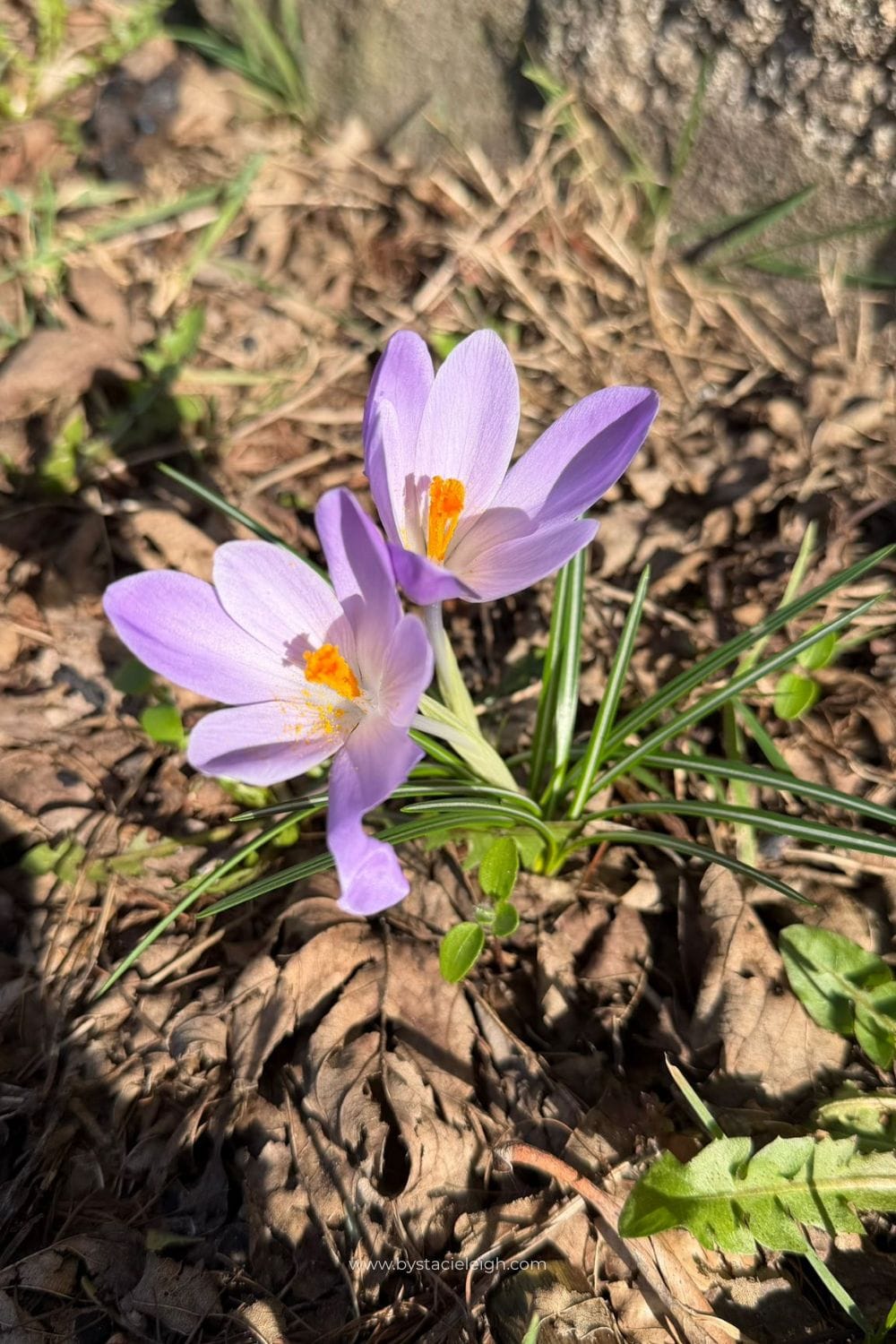
The pale lilac crocuses grow right at the base of a stone wall. These are Crocus tommasinianus, Tommy crocuses, one of the earliest varieties to bloom and the most delicate looking. Smaller than the Dutch crocuses in the fence line, softer in colour, and the first to appear each year.
That detail, delicate flowers against rough granite, is so specifically Scottish it barely needs explaining. The same contrast appears everywhere in this landscape. Something fragile beside something ancient. Heather on a cliff edge. Wildflowers in a castle ruin. Crocuses at the foot of a wall that has been standing since before anyone can remember. It’s the same contrast that runs through everything she photographs, from her garden to the Highland cows standing in frost at dawn to the Sutherland ruins she drove past on the NC500.
If you want to bring a Scottish spring garden aesthetic inside, that contrast is where to start. A rough ceramic pot. A single stem of something delicate. The imperfection is the point. If you want to build this further, here’s how to choose vessels that carry that feeling year round.
The camellia on the corner
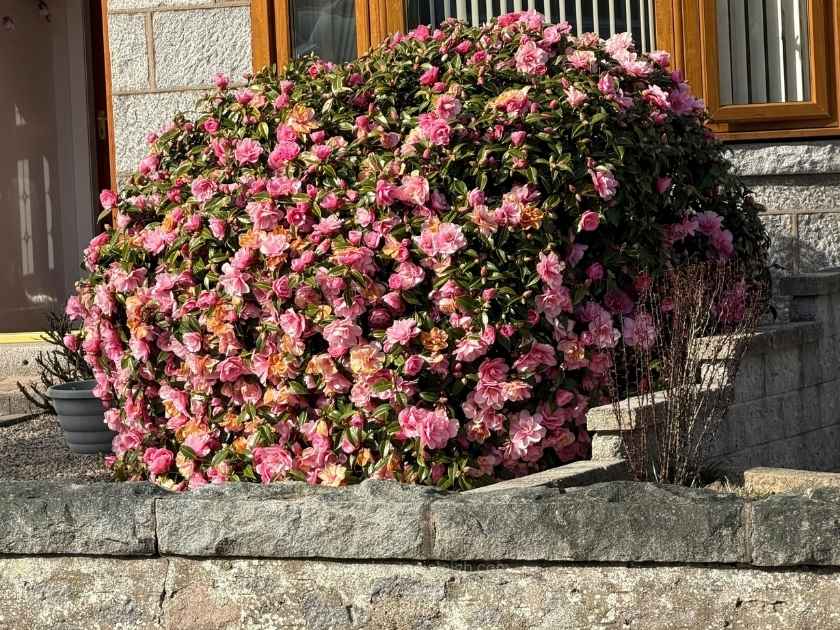
There is a camellia on a street corner near Lori’s house that stops people every March. Camellia japonica, a dome of deep pink and coral blooms so dense you can barely see the leaves beneath. It sits behind a granite stone wall, beside a front door that has probably opened onto this same view for forty years.
Lori stopped to photograph it on her way past. She sent me four images.
Camellia japonica thrives in Aberdeen in a way that surprises people who associate Scotland with cold and grey. Aberdeen’s granite-rich soil is naturally acidic, exactly what camellias prefer. The cool temperatures slow the blooms and make them last longer than they would in a warmer climate. A specimen that size has been growing there for decades, possibly longer.
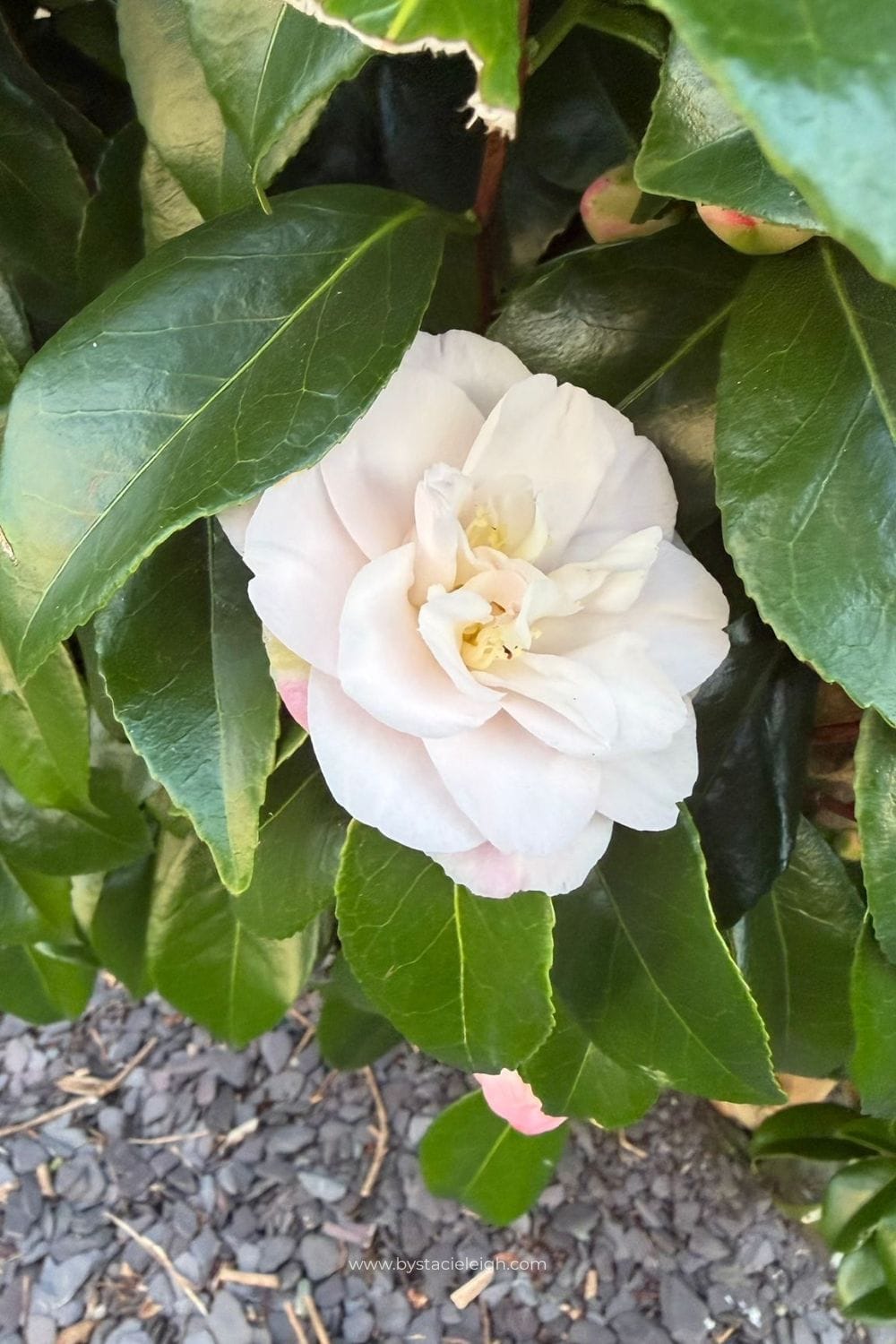
The white bloom Lori photographed close up is from the same garden, a different variety flowering alongside the pink. Single flower, cream petals, yellow stamens, deep glossy leaves. It looks like something that belongs in a botanical illustration.
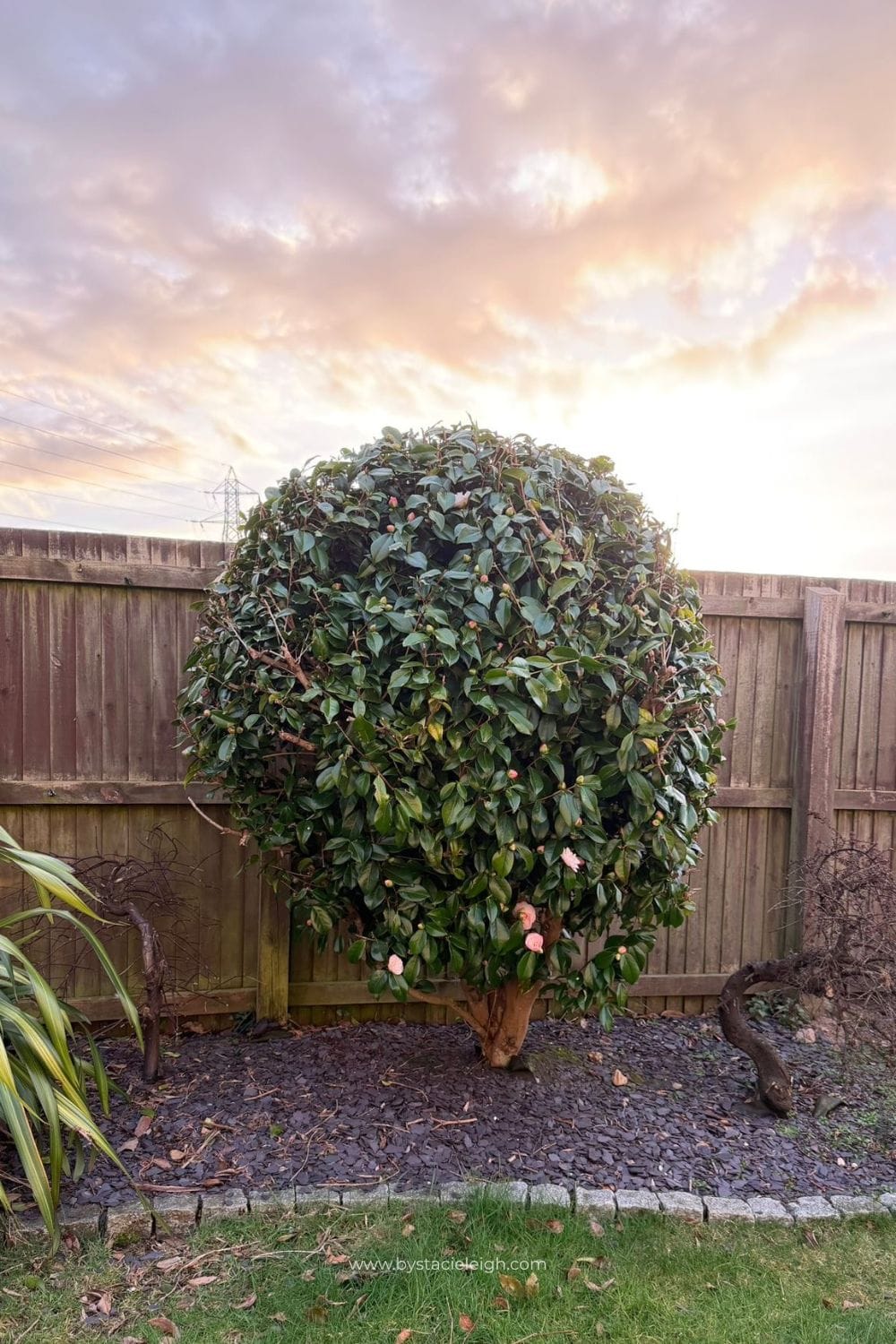
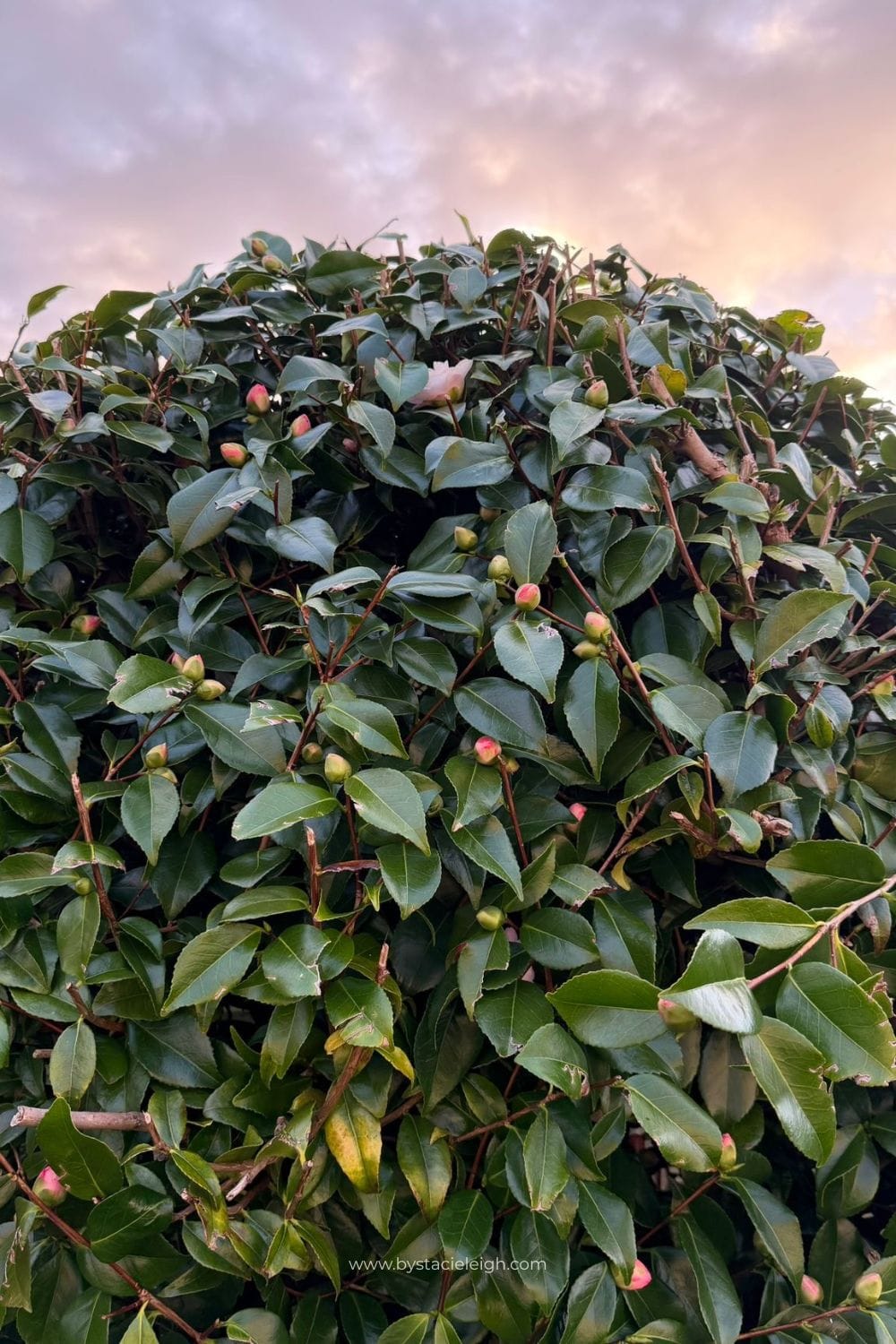
Her own camellia is still budding. She photographs it at dusk against the Aberdeen sky, pink clouds, green buds tipped with red, the anticipation of something that hasn’t opened yet. In a few weeks it will look like the one on the corner. That gap between bud and bloom is very Scottish. Things here take their time.
Bring a Scottish spring garden home
You don’t need to be in Aberdeen to grow what Lori grows. Every plant in this post is available to buy and relatively straightforward to establish, the key is choosing the right variety for your soil and climate.
Snowdrop bulbs — Galanthus elwesii
Snowdrop bulbs — Galanthus elwesii, the giant snowdrop. Plant in autumn in well drained soil and leave them completely alone. They naturalise and multiply quietly over years, returning every February without any intervention. Lori’s come back every March without fail.
Deep purple crocuses — Crocus vernus

Crocus vernus Flower Record — the large flowering deep purple variety in Lori’s fence line. Plant 20 or more together in autumn for the dense abundant look her garden has. They bloom late winter through early spring and come back reliably every year.
Purple and blue spring crocuses
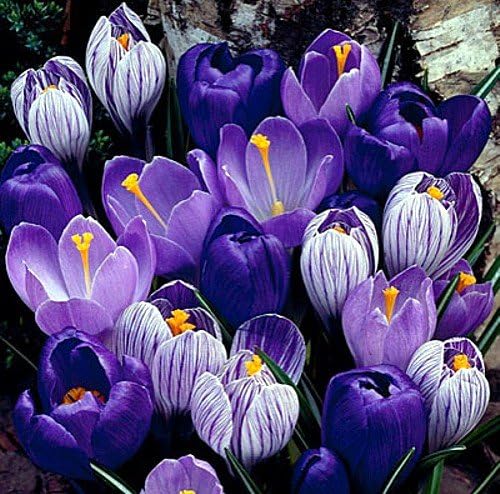
For a mix of purple and blue toned spring crocuses — the kind that look planted by the landscape rather than by hand — this blend works beautifully at the base of a stone wall or along a garden border. Plant in clusters of ten in autumn and leave them to naturalize.
Camellia japonica
The long game plant. A young Camellia japonica takes several years to reach its full potential but once established it flowers reliably every spring for decades. Choose an acidic, well drained spot sheltered from harsh morning sun — late frosts can damage early buds. In mild climates it will eventually become the camellia on your corner that stops people every March.
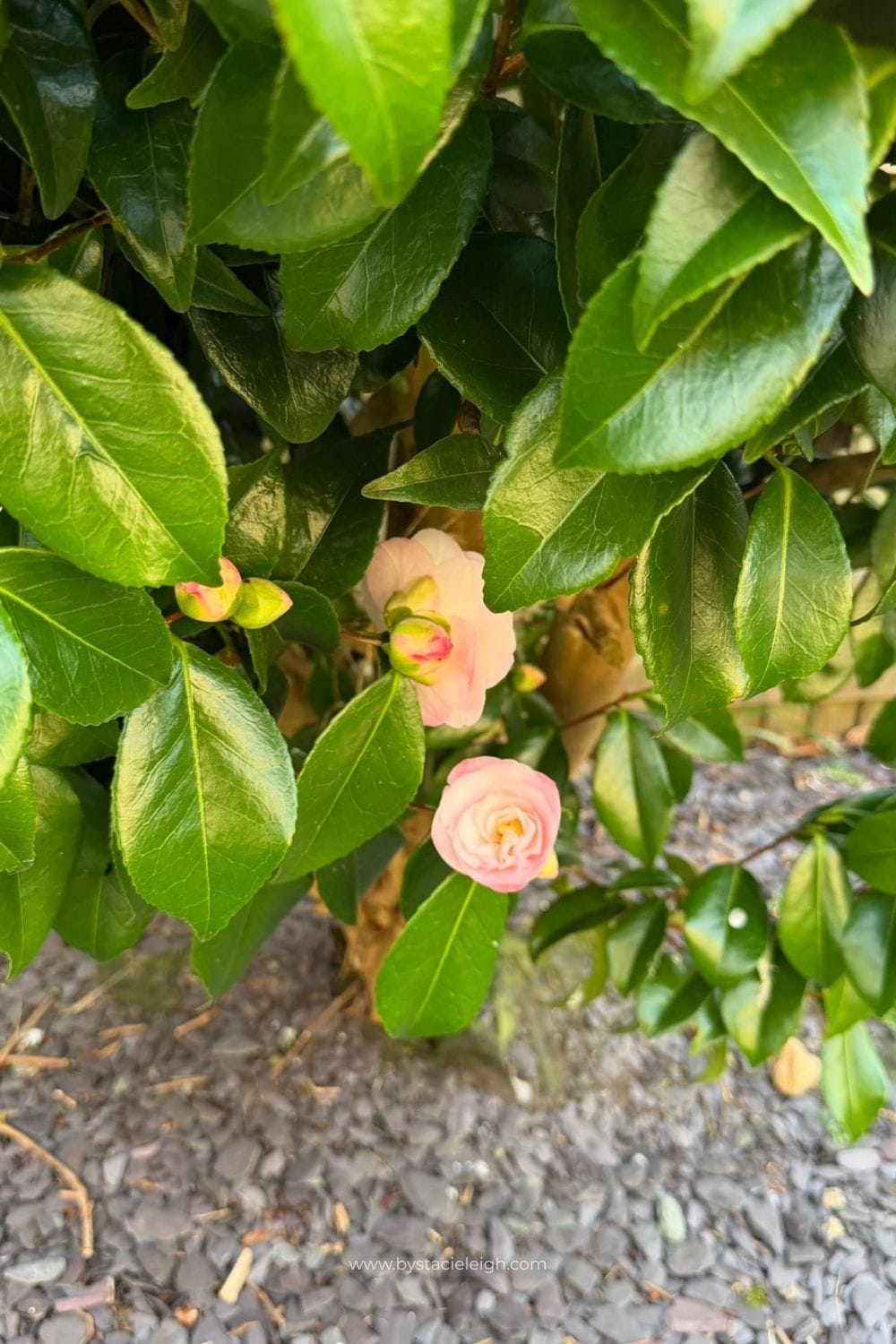
Available in pink and white varieties, choose the colour that suits your space.

Can be grown in zones 6–9
Suitable for pots, containers, and garden beds
Camellias bloom in late winter to early spring
Grows up to 3–5 feet tall at maturity
Scottish gardens worth visiting in spring
If Lori’s garden has made you want to see a Scottish spring in person, these are the gardens worth planning a trip around. Each one is at its best between March and May.
Crathes Castle Garden — Aberdeenshire
Crathes Castle Garden sits twelve miles from Lori’s front door. The walled garden dates to the 1700s and the yew hedges alone are worth the visit, some are three hundred years old. In spring the herbaceous borders come alive against ancient stone walls in exactly the way Lori’s garden does, just on a grander scale.
Inverewe Garden — Wester Ross
On the NC500 route, which makes it a natural stop on a Highland road trip. A subtropical garden in the Scottish Highlands that exists because of the Gulf Stream, palms and rhododendrons growing at the same latitude as Moscow. In spring the colour is extraordinary and the camellias here are among the finest in Scotland.
Dunrobin Castle Gardens — Sutherland
Dunrobin is the historic seat of Clan Sutherland, our family’s clan. The formal gardens face the North Sea and were designed in the style of Versailles. Our clan motto is Sans Peur, Without Fear. In spring they fill with colour against a backdrop of castle turrets and open sea. If you’re driving the NC500, this is the stop that earns the whole journey.
Crarae Garden — Argyll
A woodland garden managed by the National Trust for Scotland, at its most spectacular in spring when rhododendrons and bluebells carpet the hillside above Loch Fyne. Remote and unhurried, exactly the pace a Scottish garden should be visited at.
Benmore Botanic Garden near Dunoon is worth the detour specifically for its camellia collection — one of the finest in Scotland. If Lori’s neighbour’s camellia stopped you in your tracks, Benmore in March and April will do the same thing on a much grander scale.
When to visit for spring colour
Scotland’s spring arrives later than England and later still in the northeast where Lori lives. Use this as a rough guide:
- February to March — Crocus tommasinianus and snowdrops across most of Scotland, camellias beginning to open in sheltered spots and mild gardens
- March to April — Crocus vernus in full bloom, Camellia japonica at its peak, daffodils beginning, first signs of blossom
- April to May — rhododendrons at Inverewe and Crarae, bluebells in woodland gardens, everything at its most vivid
- May — yellow gorse covering the hillsides, the NC500 at its most dramatic, Dunrobin gardens in full colour
Lori says May is the month she would choose above all others. The light lasts until almost ten at night, the midges haven’t arrived yet, and the landscape shifts from winter brown to something that looks like it was painted.
Planning the trip but want someone else to handle the route? TourRadar has guided Scotland tours covering the Highlands, the northeast coast, and the NC500 corridor — from short 3-day breaks to full 10-day expeditions. Use code StacieS50 for savings on your booking.
Scottish Spring Garden – Common Questions
When do snowdrops bloom in Scotland?
In Aberdeen and the northeast, Galanthus nivalis typically appears in late February or early March. Further south and west they can come as early as January in a mild year.
Do camellias grow well in Scotland?
Yes — better than most people expect. Aberdeen’s granite-rich soil is naturally acidic which is exactly what Camellia japonica prefers. The cool temperatures slow the blooms and extend the flowering season. Established specimens in northeast Scotland can reach the size of the one in Lori’s neighbour’s garden — a dome of colour that appears every March without fail.
What is the difference between Crocus vernus and Crocus tommasinianus?
Crocus vernus is the larger Dutch crocus — the deep vivid purple variety in Lori’s fence line. Crocus tommasinianus is smaller, paler, and earlier to bloom. Both naturalise readily in Scottish conditions. Plant both together for the longest possible season of colour.
What grows well in a Scottish spring garden?
Snowdrops, Crocus tommasinianus, Crocus vernus, Camellia japonica, daffodils, and primroses are the most reliable. All handle the cold and wind well. The acidic soil in northeast Scotland particularly suits camellias and rhododendrons.
Is Scotland worth visiting in spring?
Lori says yes without hesitation. Fewer tourists than summer, lower accommodation prices, and the landscape transitioning from winter to colour in real time. The NC500 in May is a completely different road to the NC500 in August.
What is the best Scottish garden to visit in spring?
Inverewe in Wester Ross for the most dramatic colour and the finest camellias. Crathes Castle for the most accessible from Aberdeen. Dunrobin for the most historically significant — and if your family carries a Scottish clan name, the most personal.
Read next
If Lori’s garden has made you curious about what the rest of Scotland looks like through her eyes, the Highland cows, the stone ruins, the Sutherland landscape our family came from, start here.