Our grandmother was a Sutherland. It’s a surname that comes directly from the land, the far north of Scotland, where the Highlands push all the way to the coast and the mountains stand alone in the middle of open moorland.
My sister Lori moved to Aberdeen three years ago. She didn’t plan to become the family photographer of our ancestral landscape. But Scotland has a way of making that happen.
Her photos started filling my camera roll, Highland cows at dusk, stone ruins beside still lochs, yellow gorse rolling across moorland. I started decorating around them. This post is what I learned.
The Scotland Highlands aesthetic – what it actually is
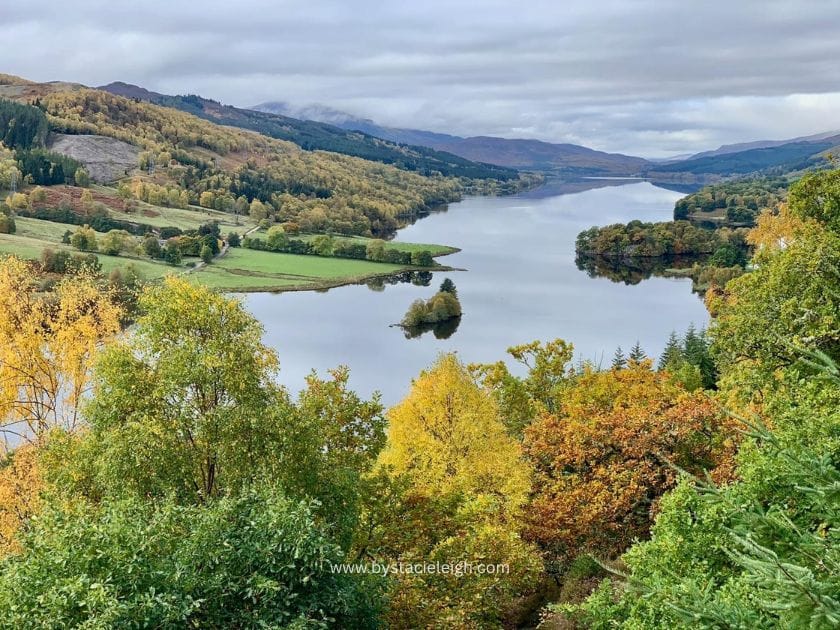
The Scotland Highlands aesthetic isn’t a Pinterest trend. It’s a direct translation of a landscape, one that has been shaped by rain, stone, and centuries of weather into something that looks unlike anywhere else.
Look at Lori’s autumn loch photo and you have the entire palette in a single frame:
- Burnt gold – the turning birch and oak trees along the water’s edge
- Moss green – deep, heavy, grey-toned from centuries of Scottish rain
- Slate grey – the loch surface, the sky, the stone walls along every road
- Peat brown – the moorland grass, the hillsides in winter, the soil itself
These are not chosen colors. They are observed ones. That difference is what separates a room that feels Scottish from one that just contains tartan.
Our family tartan – and why it matters for the aesthetic
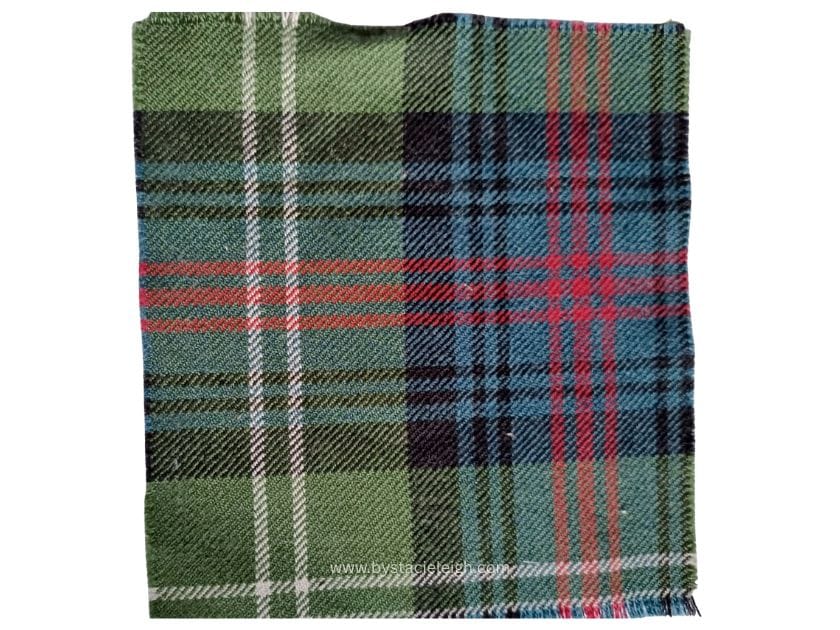
Our grandmother’s maiden name was Sutherland – a clan name that belongs to the far northwest Highlands, the same remote region Lori has been photographing on the NC500. When she sent me a photo of a loch with Suilven rising behind it, she was standing in the landscape our family came from.
The Sutherland tartan sits in moss green, teal, deep red and black. Look at it against a stone wall and you understand immediately why Scottish tartans look the way they do – every color comes directly from the ground.
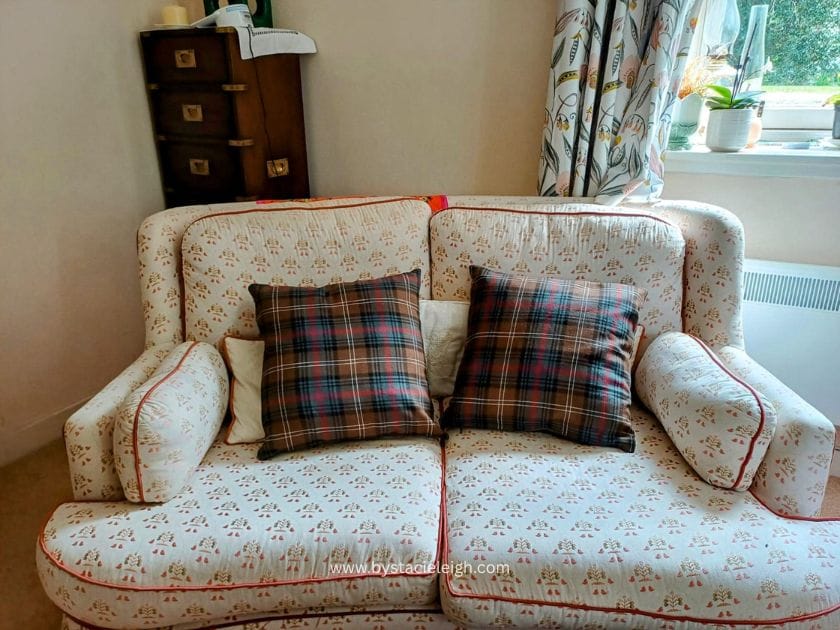
For the home, tartan doesn’t need to be loud. Two cushions on a plain sofa, the way my aunt has it, is enough. The pattern carries the whole story.
Bringing the Highlands inside – what actually works
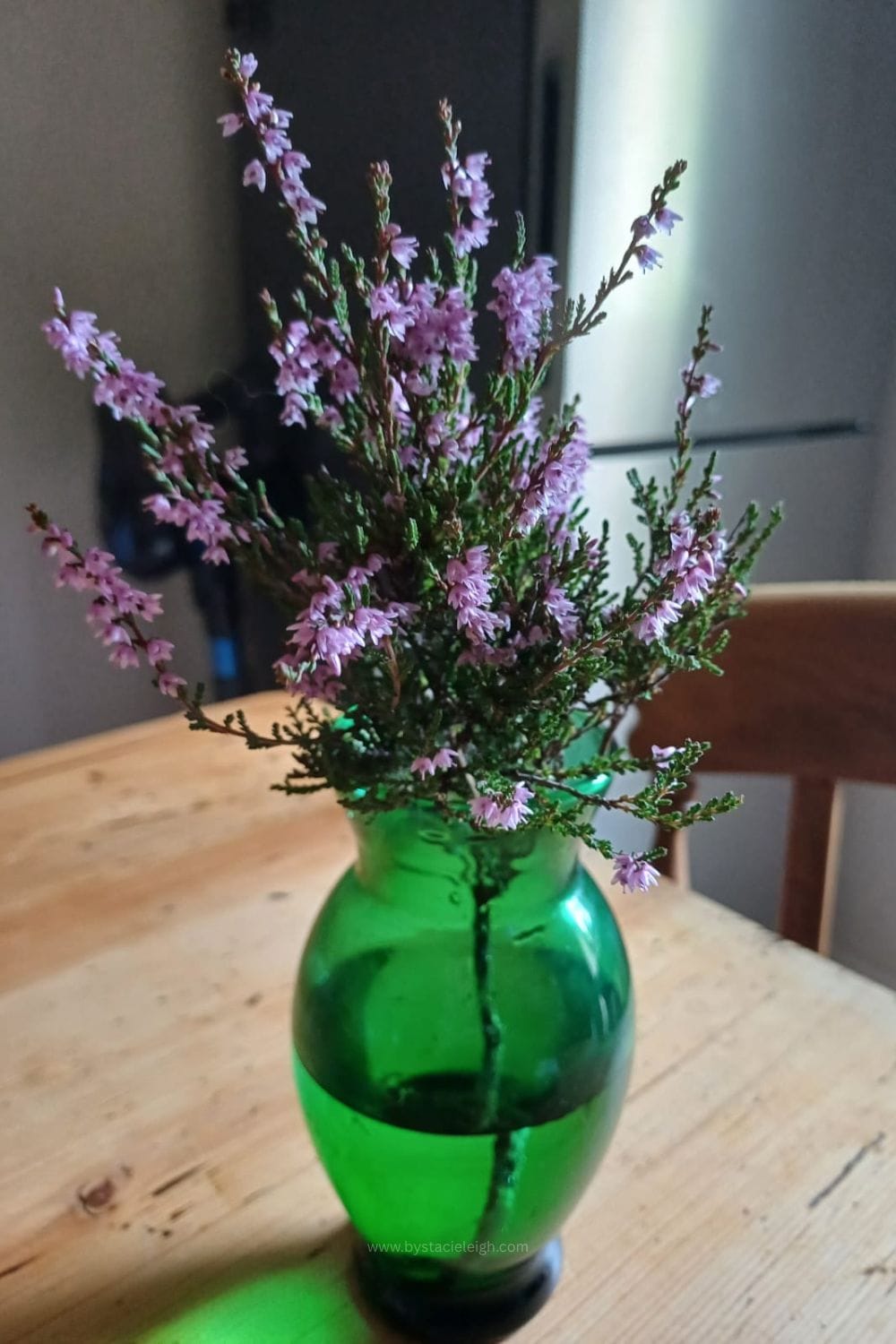
Lori cuts heather from outside and puts it in a green glass vase on her kitchen table. That one image – purple heather, green glass, pale wood – contains more Scottish interior design information than any mood board.
The same garden where her snowdrops and camellias arrive every spring without fail.
Start with one heavy textile
A wool throw in tartan, plain moss green, or muted slate anchors the room the way heavy cloud cover anchors a Highland morning. Everything else organizes around it. Don’t start with paint, start with wool.
Use stone wherever you can justify it
Stone-effect planters, slate coasters, rough ceramic pieces with an unfinished glaze. The Highlands don’t do polished surfaces. Anything that looks hand-finished or slightly imperfect is right. Anything that looks lacquered is wrong.
Keep wood dark and aged
Oak, walnut, reclaimed timber, anything that looks like it has been somewhere. Avoid anything that looks new. The Highlands aesthetic is built on the feeling that objects have history. Learn how to care for your antique furniture here.
Bring something in from outside
Lori’s heather vase is the best example of this. Dried thistles, a piece of slate from a beach walk, a branch of gorse. The aesthetic is about the landscape coming inside, not just being referenced from a distance. If you want to build this further, here’s how to choose the right vessels.
The Highland coos

Lori lives near a farm with Highland cows. She photographs them in all light, dawn, dusk, winter mornings when the frost is still on the ground. They are completely unbothered by cameras, which is why her photos of them feel so close and unhurried.
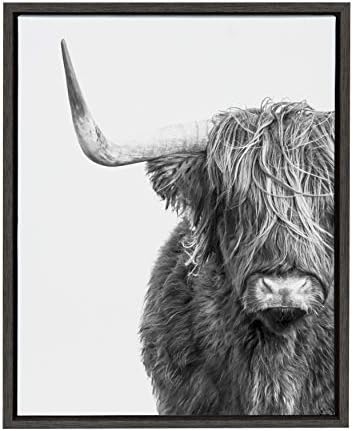
For the home, a framed Highland coo print works in kitchens, hallways, and reading corners. It gives a room personality without trying hard. It’s warm, specific, and unmistakably Scottish without being a cliché.
WHIMSICAL ANIMAL WALL DECOR
EASY TO HANG
LARGE SIZE CANVAS
Sutherland, our family’s landscape
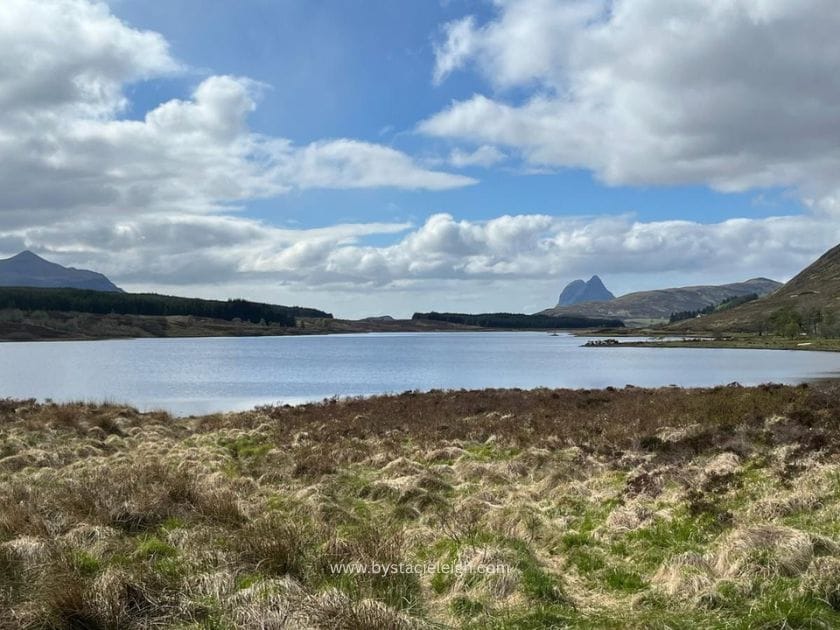
Sutherland sits in the far northwest of Scotland, one of the most remote and least visited parts of the country. The landscape there is older than almost anywhere in Europe. The rocks are Lewisian gneiss, some of the oldest on earth. The mountains rise suddenly from flat moorland with no foothills, no gradual build. They just appear.
Lori drove the NC500 and photographed it. The loch in this photo has Suilven behind it, the dome-shaped mountain that appears on the right horizon. Our grandmother grew up with a surname that belongs to this exact stretch of Scotland.
That context changes how I look at everything Lori sends. These aren’t travel photos. They’re a kind of homecoming.
If you want to experience it yourself
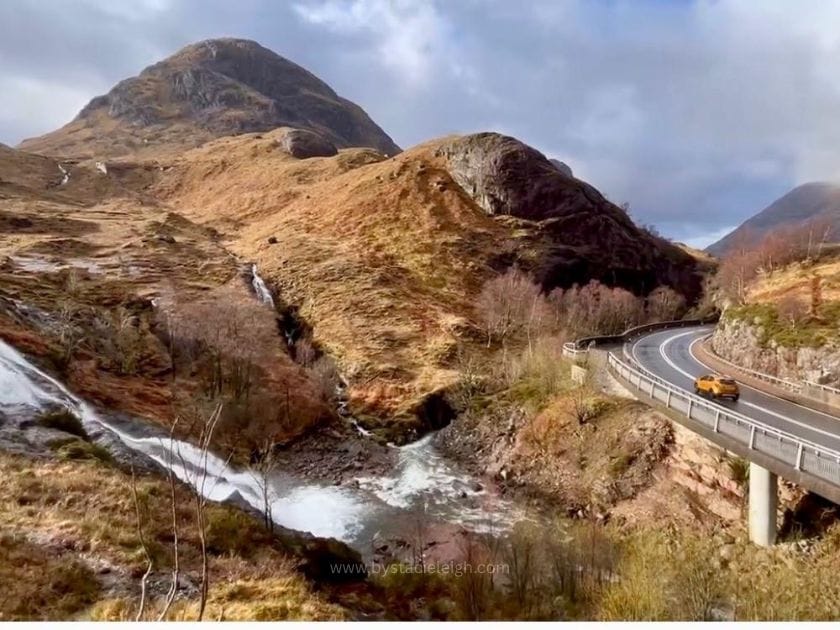
Lori’s honest advice for anyone planning a trip, from someone who actually lives there:
Drive the NC500
The North Coast 500 is Scotland’s most famous road trip, 500 miles around the top of the country through Sutherland, Caithness, Wester Ross and the northwest. It takes you through landscape that most tourists never reach. Give it at least five days. Most people wish they’d taken longer.
Stay in the landscape, not a town
The aesthetic only makes sense when you wake up inside it. A lochside cabin or a historic Highland lodge puts you in the right frame of mind from the first morning. Waking up to open moorland and grey light is what makes the colors and textures start to make sense.
Go in May or September
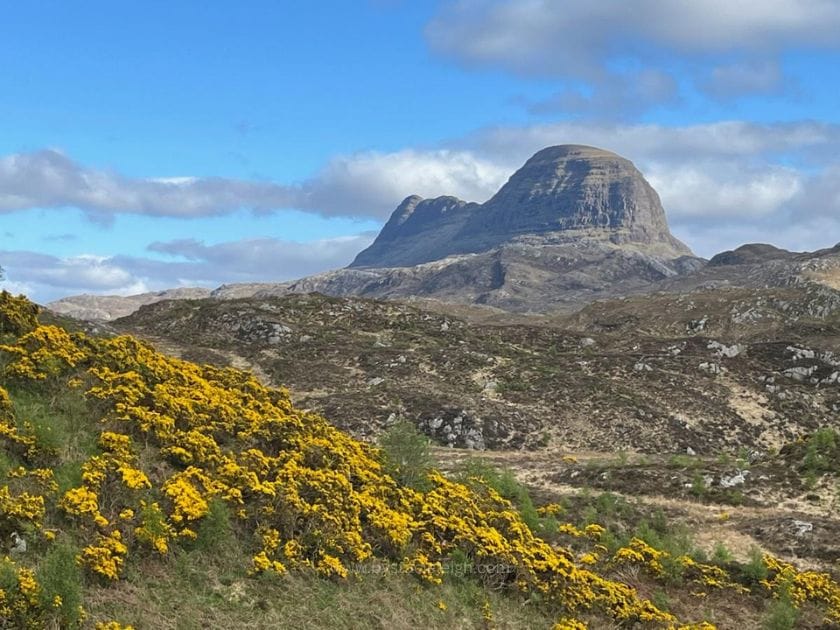
May brings yellow gorse and the first real warmth. September turns the hillsides gold and auburn before the winter sets in. Both seasons show the palette at its most vivid. July and August are busier and the midges are at their worst.
Don’t skip Dunnottar
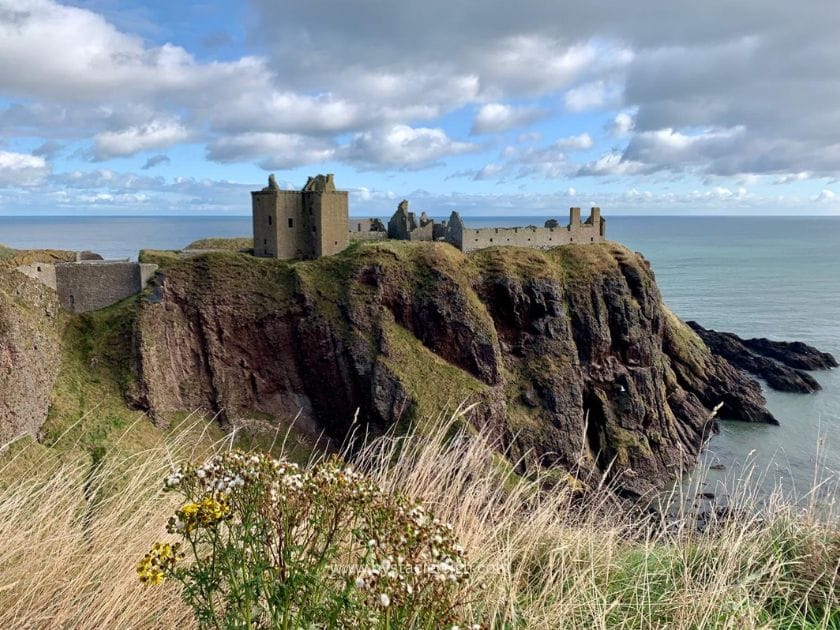
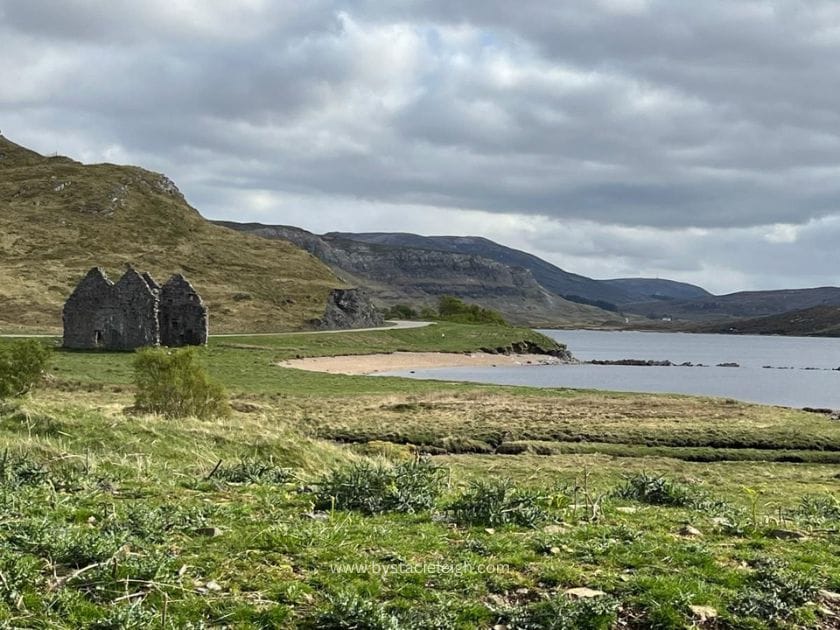
Lori is based in Aberdeen, which puts Dunnottar Castle fifteen minutes away. Castle ruins on a sea cliff above the North Sea, with wildgrass and wildflowers in the foreground. It’s one of the most photographed places in Scotland for good reason, it looks exactly like what you imagine when you think of Scotland.
If you want to explore Scotland with a guide who knows the landscape, TourRadar has tours ranging from 3 to 10 days covering the Highlands, the NC500, and the northeast. Use code StacieS50 for savings on your booking.
Most visitors fly into Edinburgh or Glasgow, then drive north. Aberdeen has its own airport with direct connections from London and Amsterdam — which is where Lori flew in when she first moved.
What to Pack for Scotland — Lori’s Honest List
You never know when it’s going to rain. Lori wears a softshell rain jacket year round. Not occasionally, year round. Scotland’s weather changes within the hour and a lightweight waterproof that packs small is the single most useful thing you can bring.

Waterproof & Windproof & Breathable
Warm but Not Bulky
Fixed Hooded Windbreaker
Scotland uses the same three-pin plug as the rest of the UK. If you’re coming from the US bring two adapters, one for charging overnight and one for the car or your camera bag.

US to Europe plug adapter
USB C PD 20W
8 in 1 Type C Adapter for Travel
The NC500 Pocket Map is worth having in the car even if you’re using Google Maps. Signal drops frequently in the northwest Highlands, Lori has been in areas with no data for hours. A physical map of the route is not nostalgic, it’s practical.

FAQ: Scotland Highlands Aesthetic
Is this the same as Cottagecore?
No. Cottagecore is florals, warmth, and softness. The Scotland Highlands aesthetic is stone, wool, and quiet. Less cozy cottage, more ancient and grounded. The mood is different, it carries weight.
How do I start without buying everything at once?
One wool throw and one framed landscape print. That’s genuinely enough to shift the feeling of a room. If you have Scottish heritage, find your clan tartan and start there, it anchors everything else.
What plants work with this aesthetic?
Fresh or dried heather is the obvious choice, and if you can find it locally, cut it yourself the way Lori does. Dried thistles, architectural ferns, and Scottish moss in a stone dish all work. Anything that looks foraged rather than cultivated.
What’s the easiest color to start with?
The moss green from Lori’s landscape shots, deep, grey-toned, heavy. In paint, look for names like sage stone, highland green, or peat. Avoid anything too bright or too yellow-toned. The color should feel like it came from wet ground, not a garden center.
Do I need Scottish heritage to pull this off?
No, but if you have it, use it. Finding your clan tartan, understanding where your surname comes from, connecting the colors in your home to a real landscape, that’s what separates a Scottish-inspired room from one that just looks like a hotel lobby in Edinburgh.
All photography by Lori, Aberdeen, Scotland. All rights reserved.
This post contains affiliate links. If you make a purchase through one of these links I may earn a small commission at no extra cost to you.