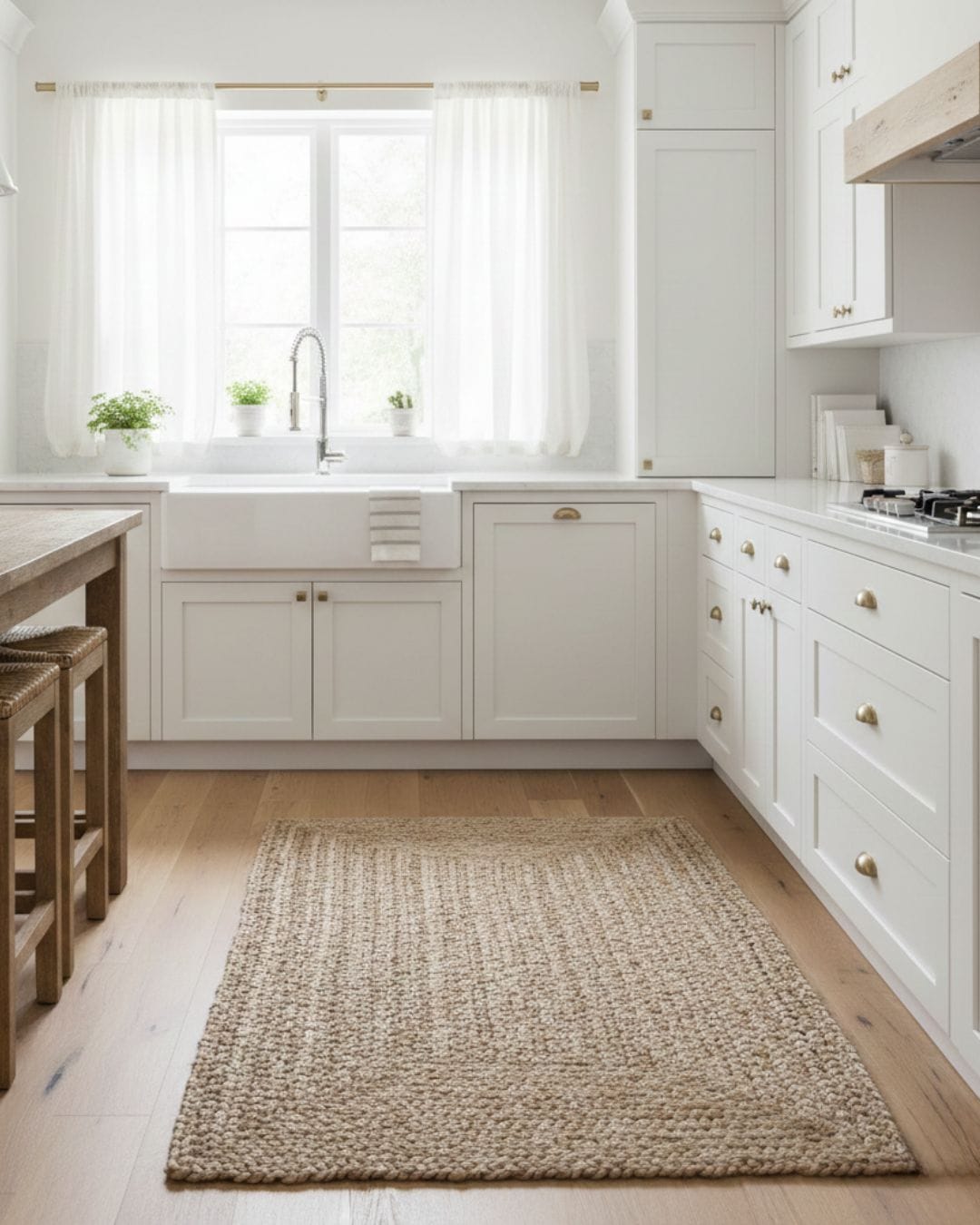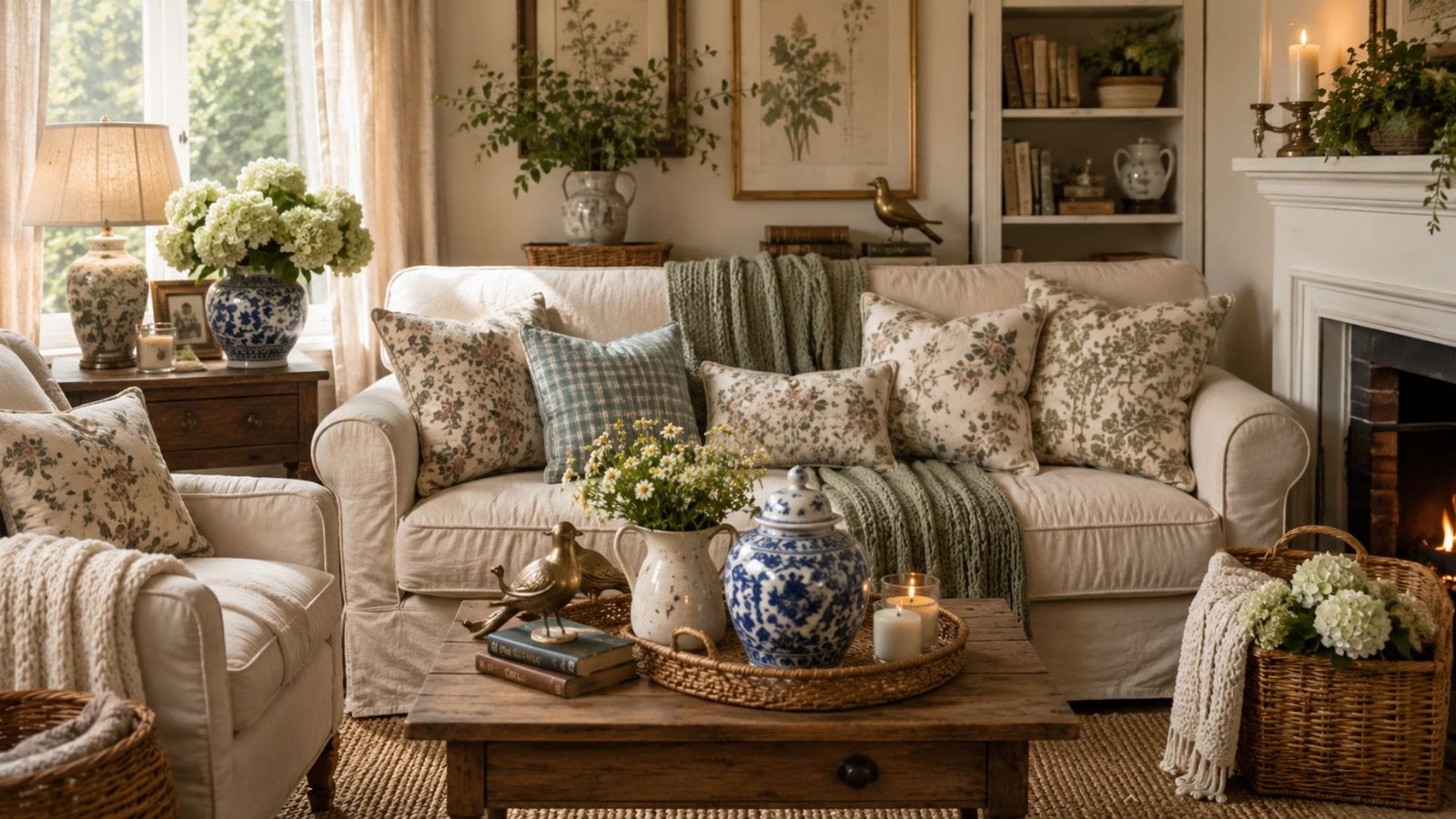
If you search “cozy cottagecore living room ideas” on Pinterest, you’ll mostly find 200-year-old English farmhouses with exposed beams and flagstone floors. And if you’re renting a modern apartment or living in a builder-grade house, that can feel completely out of reach.
But here’s what most of those Pinterest boards won’t tell you: cottagecore isn’t about the architecture. It’s about the feeling. Warmth, layers, things that look collected rather than ordered from a catalog. You can create that anywhere.
As a former furniture designer, I’ve learned that the most beautiful rooms aren’t built around expensive renovations. They’re built around intentional choices – the right light, the right texture, the right small detail that makes a space feel alive.
Here’s how to get the cottagecore living room look without touching a single wall.
Shop the Cottagecore Look
The Cottagecore Color Palette
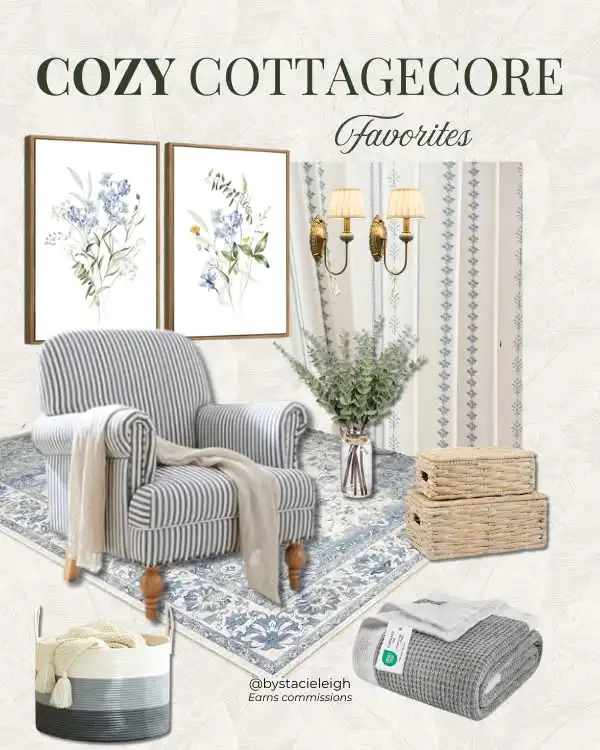
Before you buy a single thing, get the palette right. Cottagecore has a very specific color language and once you know it, you’ll stop second-guessing your choices at the checkout.
Think sage green, cream, dusty rose, warm terracotta, and muted earthy tones. Nothing bright, nothing cool-toned, nothing that reads as modern or clinical. The rule I use: if it could be a paint color in an old English cottage, it belongs. If it looks like it came from an IKEA showroom, it probably doesn’t.
For walls, warm whites and soft greiges work best as a neutral base. From there you layer in color through textiles, ceramics, and plants. This is especially good news for renters – you never have to paint a thing.
Want to get the colors right first? See the full Cottagecore color palette guide for your whole home.
Shop the Cottagecore Living Room Ideas
Vintage Glazed Ceramics
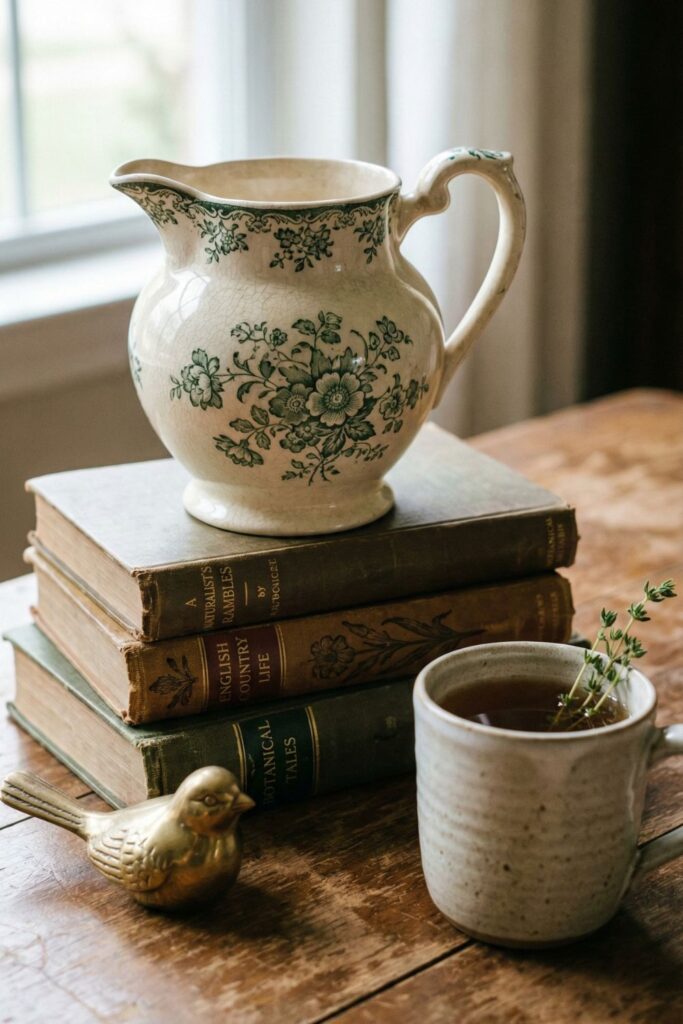
Modern glass vases tend to feel formal. Cottagecore spaces warm up immediately when you bring in ceramic pitchers, crocks, and vintage-inspired pottery with subtle imperfections – the kind of pieces that look like they came from a market stall, not a department store.
Look for muted glazes in cream, sage, or dusty blue. Slight drips, uneven rims, and hand-thrown shapes all add to that collected feeling. Group pieces in odd numbers – three on a shelf, or a small pitcher next to a taller vase – for that effortless, lived-in look.
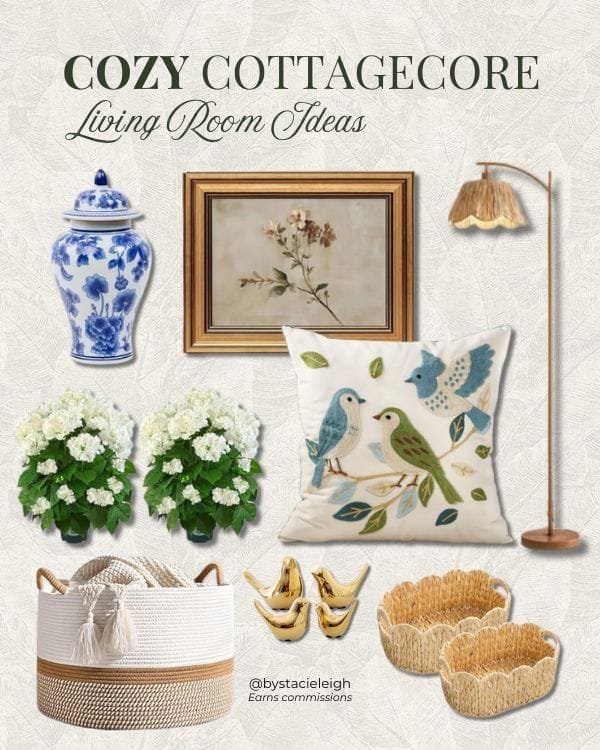
I love this Vintage Style Floral Pitcher. It has just enough patina to look like a flea market find, but it’s perfect for dried stems or fresh blooms on a coffee table.
Style Tip: Fill ceramic pitchers with dried pampas grass, cotton stems, or eucalyptus instead of fresh flowers. They last longer, need no maintenance, and actually look more cottagecore than fresh blooms.
Add a Touch of Whimsy
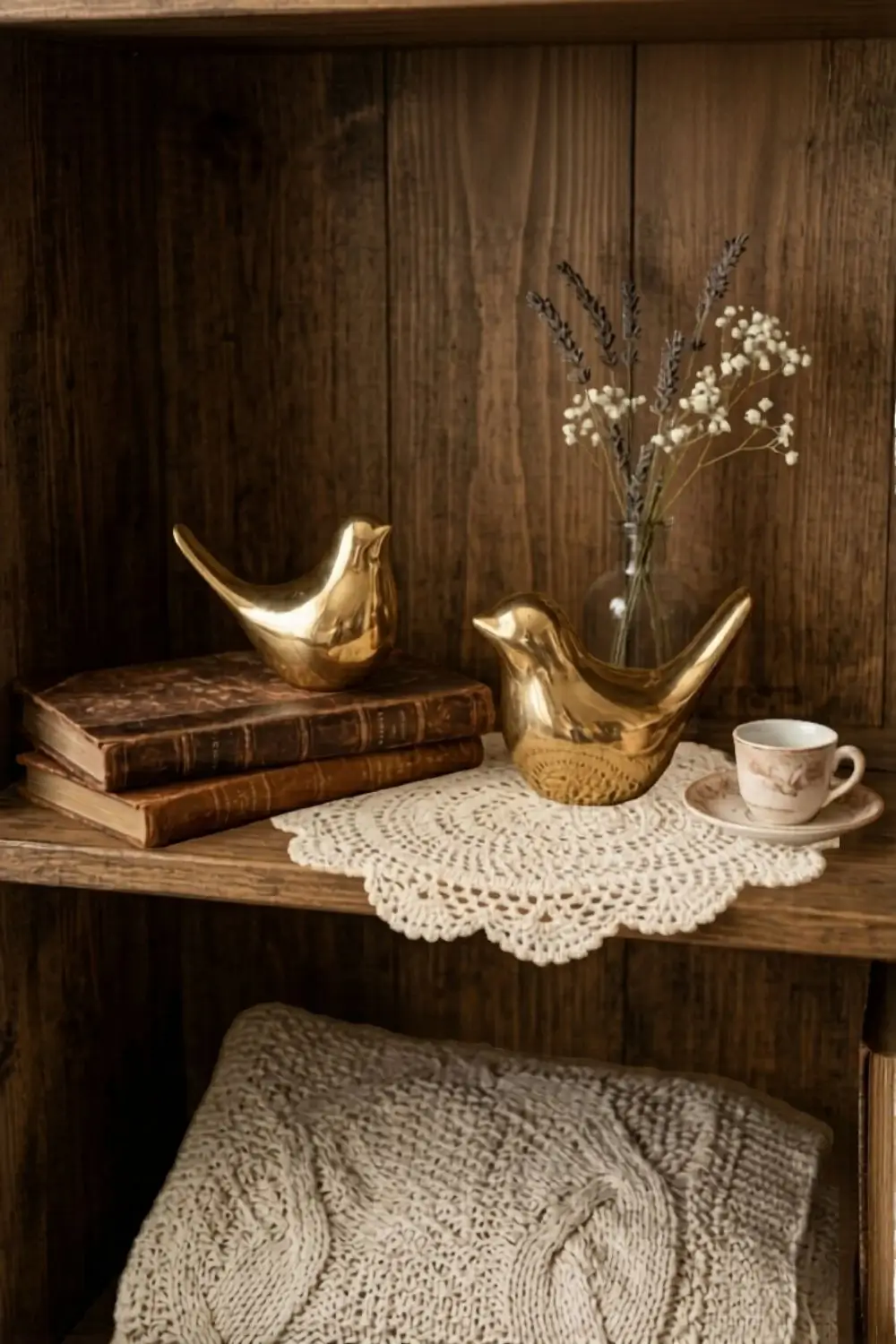
English interiors almost always have one quirky detail – a small brass animal, a playful print, a ceramic bird on a shelf. These pieces make a room feel genuinely lived in rather than staged.
A brass bird figurine is one of my favorite small touches. It’s heavy, tactile, and makes me smile every time I see it. You can tuck it on a side table, console, or bookshelf alongside your ceramics.
This is also where you can bring in your personality. A vintage botanical print, a stack of old books with beautiful spines, a small framed illustration of wildflowers – these details are what separate a cottagecore room from a farmhouse room. Farmhouse leans practical. Cottagecore leans romantic and a little whimsical.
Small details like this break up the seriousness of a room and make a rental feel personal and intentional.
Recreate This Cottagecore Living Room
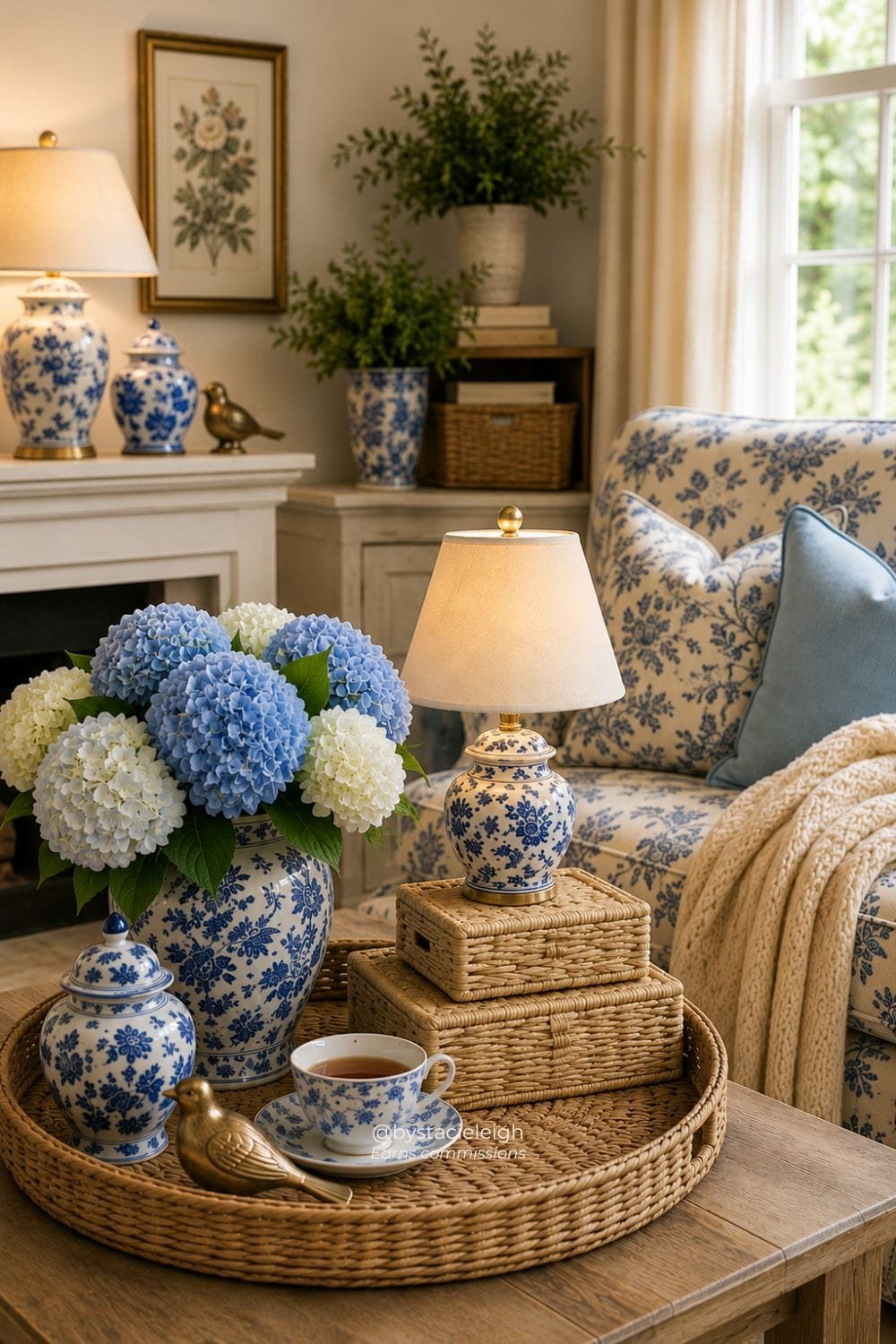
The Low Light Rule: Warm Lighting Aesthetic for Cottagecore Spaces
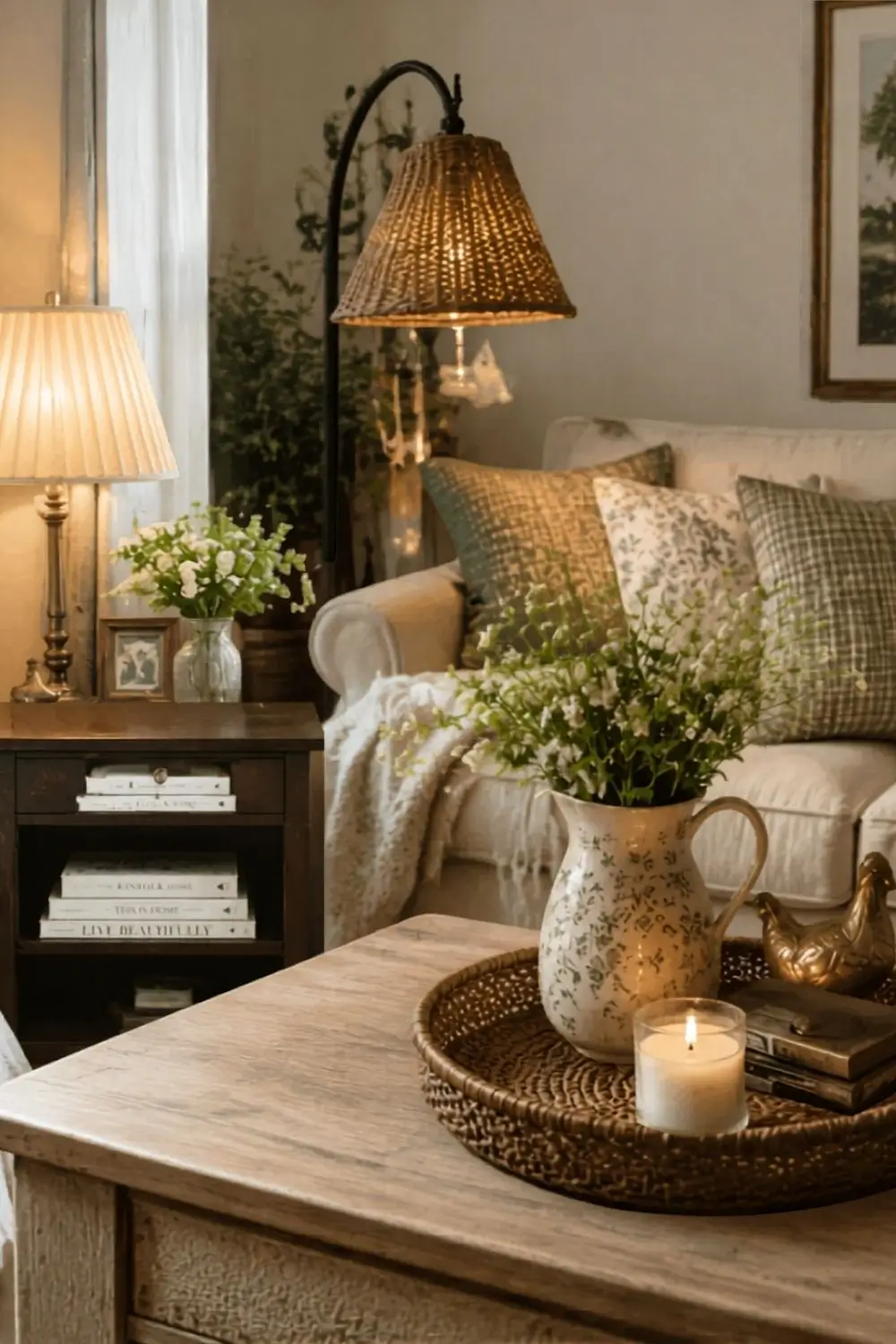
Overhead lighting is harsh. Cottagecore thrives on warm, cozy pools of light – think golden hour indoors. Use table lamps, floor lamps, and warm LED bulbs (2700K) to make corners feel inviting rather than clinical.
I’m obsessed with this Rattan Arch Floor Lamp. The woven shade adds texture even when it’s switched off, and the light it casts feels like late afternoon sun.
A candle or two on the coffee table after dark completes the picture. Cottagecore spaces are meant to feel like somewhere you want to stay.
Style Tip: If you’re renting and can’t change your fixtures, just swap the bulbs. Warm-white LEDs at 2700K make a bigger difference than any piece of furniture.
Layered Lighting 101: How to Get That Cozy Glow
Here’s something most people get wrong about cozy lighting. It’s not about finding the perfect lamp. It’s about using more than one.
A single overhead light, no matter how nice the fixture, flattens a room. It removes shadow, depth, and warmth all at once. The rooms that feel truly inviting, the ones you want to sink into, are almost always working with three light sources instead of one.
This is called layered lighting, and it’s the real secret behind a warm lighting aesthetic. Here’s how to build it in your own space.
Layer One: Ambient Light
This is your base layer, usually a floor lamp. It fills the room with a soft, general glow and sets the overall mood before anything else is added. A rattan or wood floor lamp with a warm bulb works well here since the natural material adds texture even when the lamp is off.
Layer Two: Task Light
This is your table lamp, positioned where you actually need light, beside a reading chair, on a console, near a favorite corner. It adds a second point of warmth at a different height than your floor lamp, which is what creates depth in the room instead of one flat wash of light.
Layer Three: Accent Light
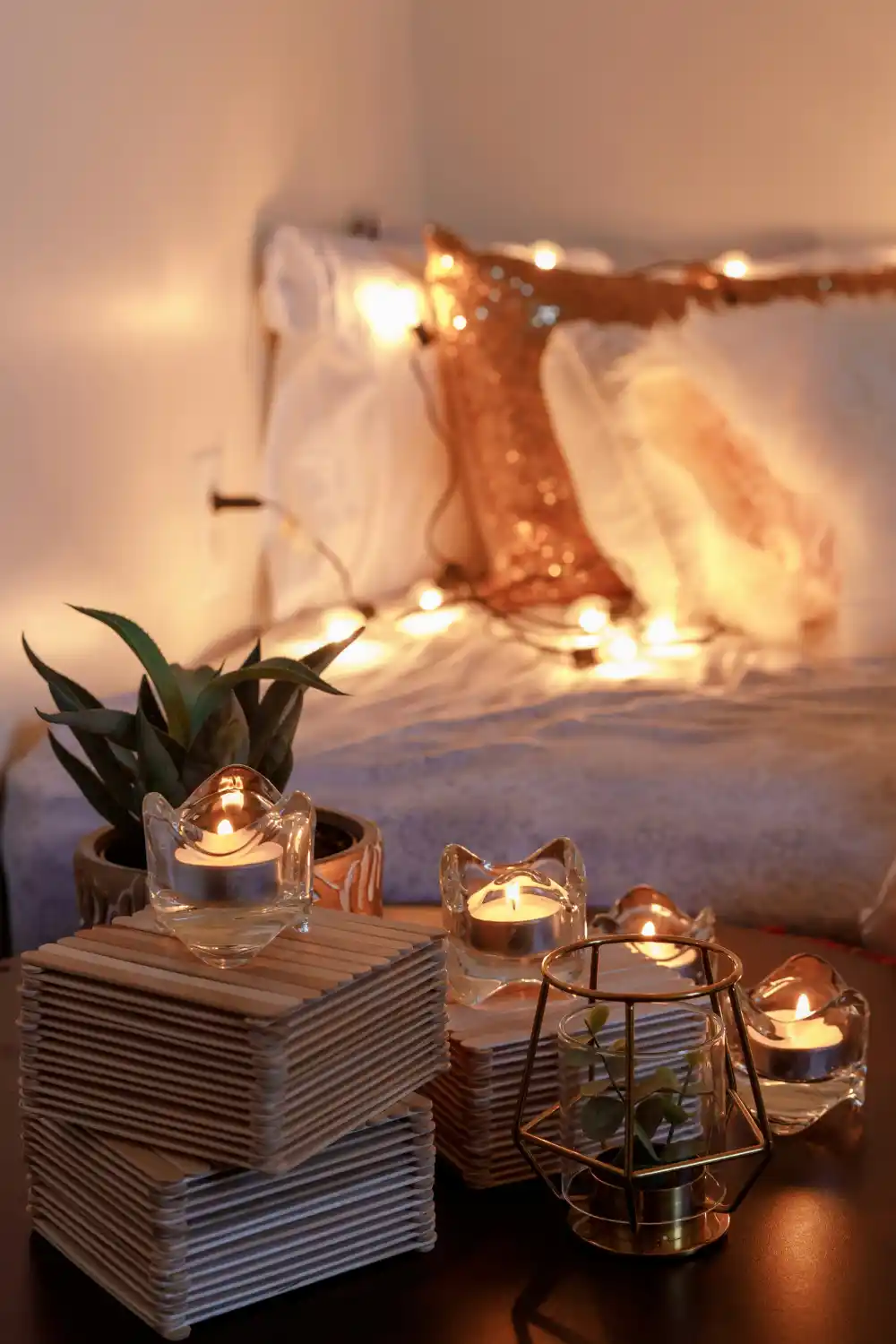
This is the smallest layer and the one people skip most often. Candles, a small string of warm fairy lights, or even a tiny plug-in nightlight tucked on a shelf. This layer is what makes a room feel finished. It catches the eye at a lower height and adds a flicker of movement that lamps alone can’t give you.
Why This Works
Three light sources at three different heights mimic the way natural light falls in a room throughout the day, soft, layered, and never flat. It’s the same principle interior designers use, just simplified for a home you’re not gutting or renovating. You’re not adding more light. You’re adding it in the right places.
Want to build this look in your own space? Browse the full cozy lighting Idea List for floor lamps, table lamps, and warm bulb options I recommend.
Natural Textures, Jute, Linen, and Living Things
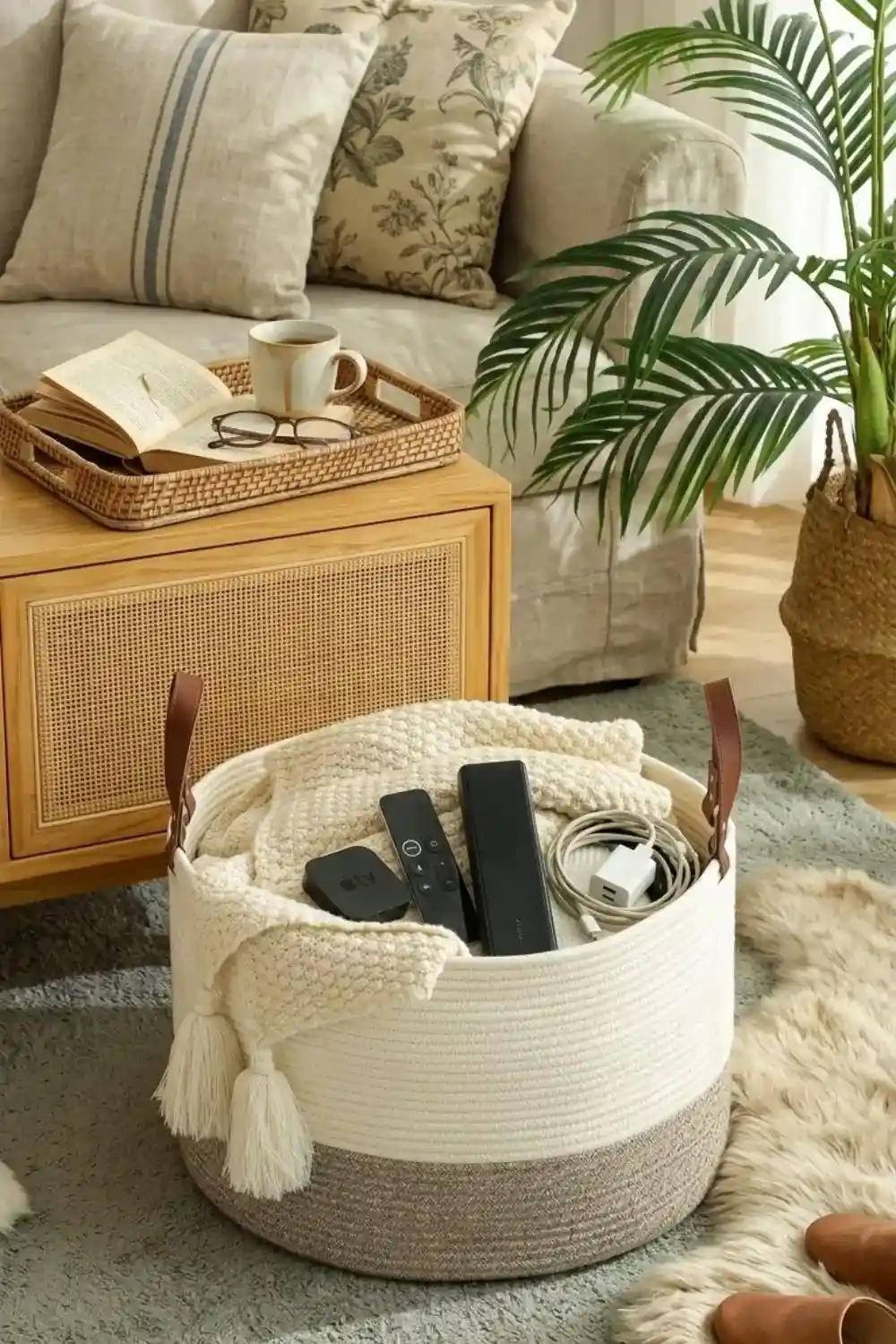
Cottagecore is deeply tactile. Think jute, linen, rattan, and wool – materials that have weight and warmth to them. But the one element that ties it all together is something living.
Plants belong in a cottagecore living room. Not a single dramatic fiddle leaf fig in a corner – think trailing pothos on a shelf, a small herb pot on the windowsill, dried botanicals in a ceramic vase, or a fern tucked into a wicker basket. Even dried lavender hanging near a window counts. The point is that the room should feel like it has a connection to the natural world.
I use woven jute baskets to hide remotes, cords, or extra blankets. They add warmth and texture while keeping the space tidy. A few linen throw pillows or a rattan tray pulls the natural texture theme through the whole room without it feeling overdone.
Want to add instant cottagecore character to your walls? See my full cottagecore wallpaper ideas guide for renter friendly options. →
Decorate With Blue and White Ginger Jars
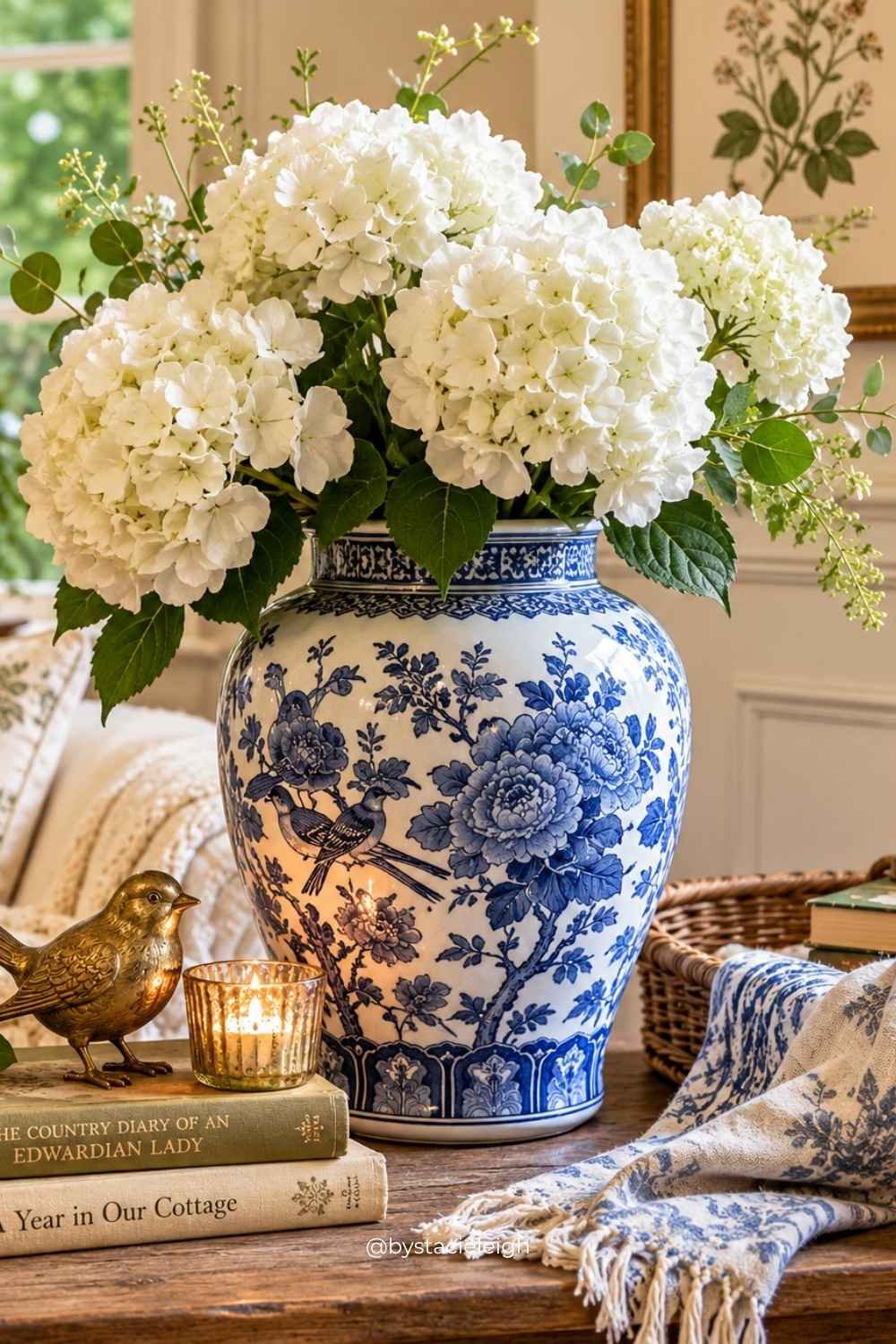
Blue and white ginger jars are one of the simplest ways to make a room feel collected and timeless. They fit the cottagecore palette perfectly because they read as vintage and considered rather than trendy.
I love pairing them with white hydrangeas – the contrast feels classic without being formal. Try one on a mantel, a coffee table stack, or a bookshelf for an instant cottage-inspired focal point.
If you’re building a shelf vignette, a ginger jar next to a small ceramic pitcher and a stack of vintage-looking books is one of those combinations that just works every time.
Common Questions About Cozy Cottagecore Room Ideas
What is the difference between Farmhouse and Cottagecore?
Farmhouse style leans into rustic practicality – simple finishes, utility, and a pared-back palette. Cottagecore feels softer and more romantic, with floral patterns, vintage-inspired decor, layered textiles, and pieces that look collected over time rather than matched as a set.
Can you do Cottagecore in a rental?
Absolutely. Lighting, textiles, ceramics, baskets, artwork, and furniture placement can completely change the feel of a space without touching the walls or floors. Most of what makes a room feel cottagecore is portable.
Is cottagecore the same as hygge?
They overlap more than most people think. Both are built around warmth, coziness, natural materials, and slowing down. The difference is that hygge (the Scandinavian concept of comfort and togetherness) tends toward a cleaner, more minimal aesthetic – think candlelight and wool blankets. Cottagecore adds a layer of romanticism, botanicals, and vintage detail on top of that same cozy foundation. If you love the feeling of hygge but want more texture and personality, cottagecore is probably your style.
Final Thoughts on Building a Slow Home
A cozy, collected living room doesn’t happen in one shopping trip. It builds over time – a lamp here, a ceramic pitcher there, a basket you found at a market. That slow accumulation is actually the point.
Start with the light. Swap one harsh bulb for a warm lamp and see how the whole room shifts. Then layer in texture. Then add something living. Before long, the space starts to feel like yours.
If you want to go deeper into the slow living aesthetic, the hygge approach to decorating is a natural next step – and it pairs beautifully with everything here.