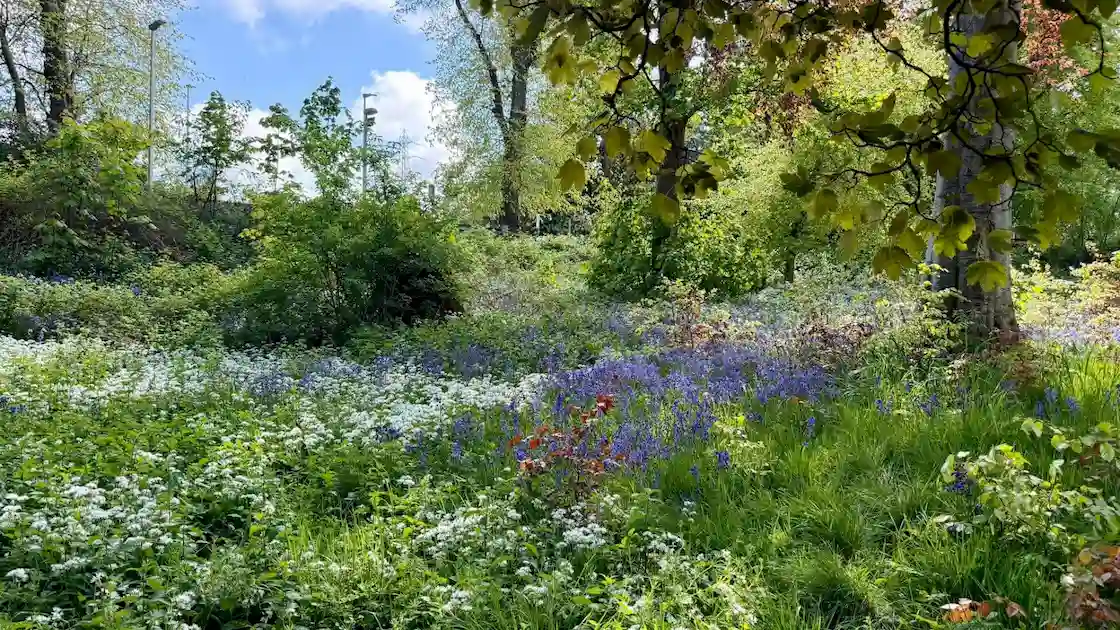
By late May the garden no longer feels tentative.
Late spring in a Scottish garden, the snowdrops are gone, the crocuses have folded back into the soil, and the camellias that carried March are beginning to fade. In their place comes something fuller, denser, almost sudden. Rhododendrons explode into colour against granite walls, bluebells spill through the grass beneath trees, and every corner of the garden feels greener than it did a week before.
This is the point in the Scottish season where spring stops whispering and starts announcing itself.
My sister Lori has been sending me new photographs almost daily from Aberdeen. The shift between March and late May is dramatic. What began as tiny signs of life has become a layered garden full of saturated colour and wild edges.
The orange shrub against the stone wall
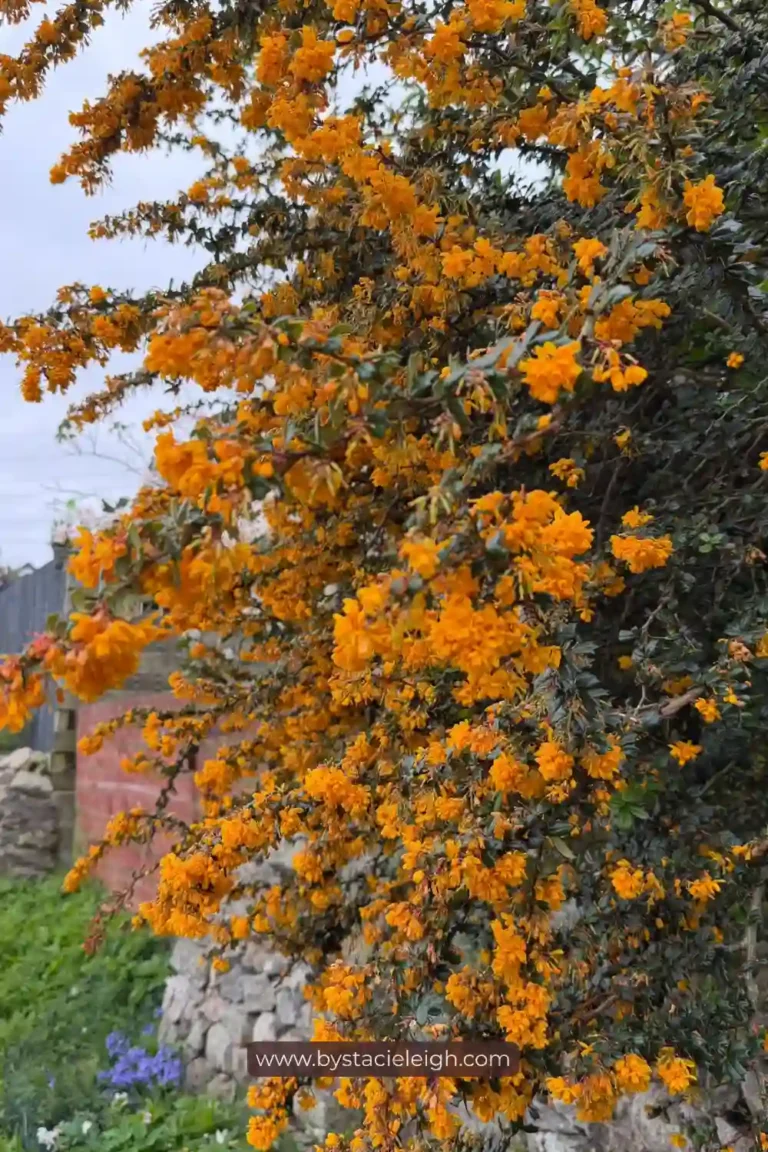
Darwin’s Barberry, Berberis darwinii
One of the brightest plants in late spring in a Scottish garden is this orange flowering shrub growing beside the old stone wall. Berberis darwinii is unmistakable once it flowers, clusters of glowing orange bell shaped blooms hanging beneath dark evergreen foliage with sharp holly-like edges.
It looks almost tropical against the cool Scottish light.
Despite its delicate flowers, Darwin’s Barberry is incredibly hardy and thrives in exposed Scottish gardens where other shrubs struggle. The contrast between vivid orange blooms and rough granite feels especially Aberdeen. Bright colour against weathered stone is a recurring theme in northeast Scotland gardens.
The shrub also attracts early pollinators, bringing bees into the garden just as the season begins accelerating.
If you want to recreate this look at home, plant it somewhere slightly informal and allow it to grow naturally rather than tightly pruning it into shape. Scottish gardens always feel better when they keep a little wildness.
Rhododendrons, the flower most associated with Scotland
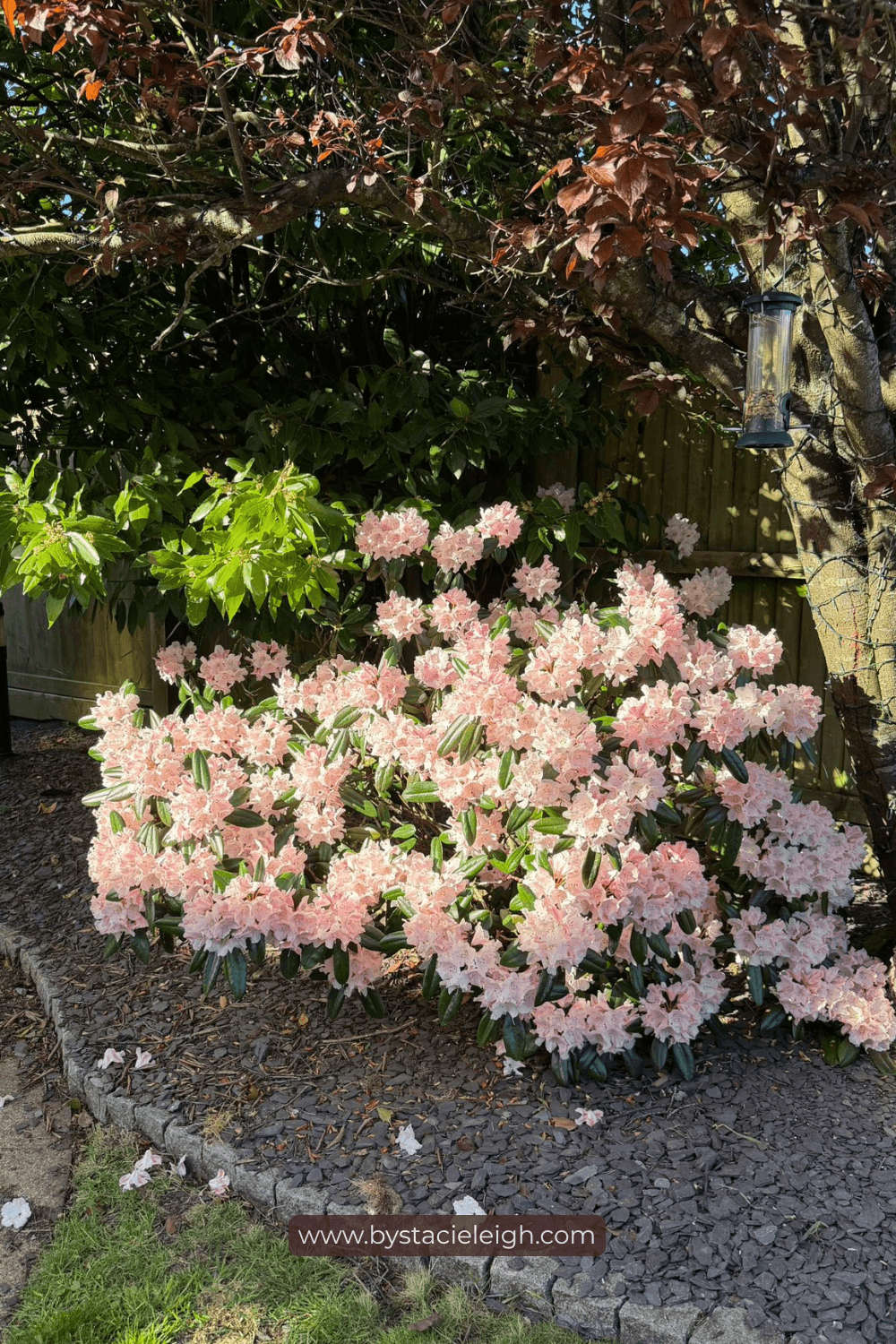
Large flowering Rhododendron hybrid
Few plants feel more connected to Scotland in late spring than rhododendrons.
The pale pink blooms Lori photographed are part of a mature rhododendron shrub that flowers every year without fail. Massive clusters of soft blush flowers sit above dark glossy leaves, creating that layered woodland garden look that Scotland does so well.
Rhododendrons thrive here because of the naturally acidic soil and cool damp climate. In Aberdeen they can grow to extraordinary sizes over decades, becoming part of the landscape itself.
By May and June they appear everywhere:
- beside country roads
- surrounding old estates
- along woodland paths
- spilling over stone walls
- filling Highland hillsides with colour
In Scottish gardens they rarely feel formal. Even in cultivated spaces they blend into the landscape rather than standing apart from it.
The colour palette matters too. Scottish spring gardens tend to favour softened tones, pale pink, deep magenta, violet blue, creamy white, all intensified by grey skies and damp air.
Bluebells beneath the trees
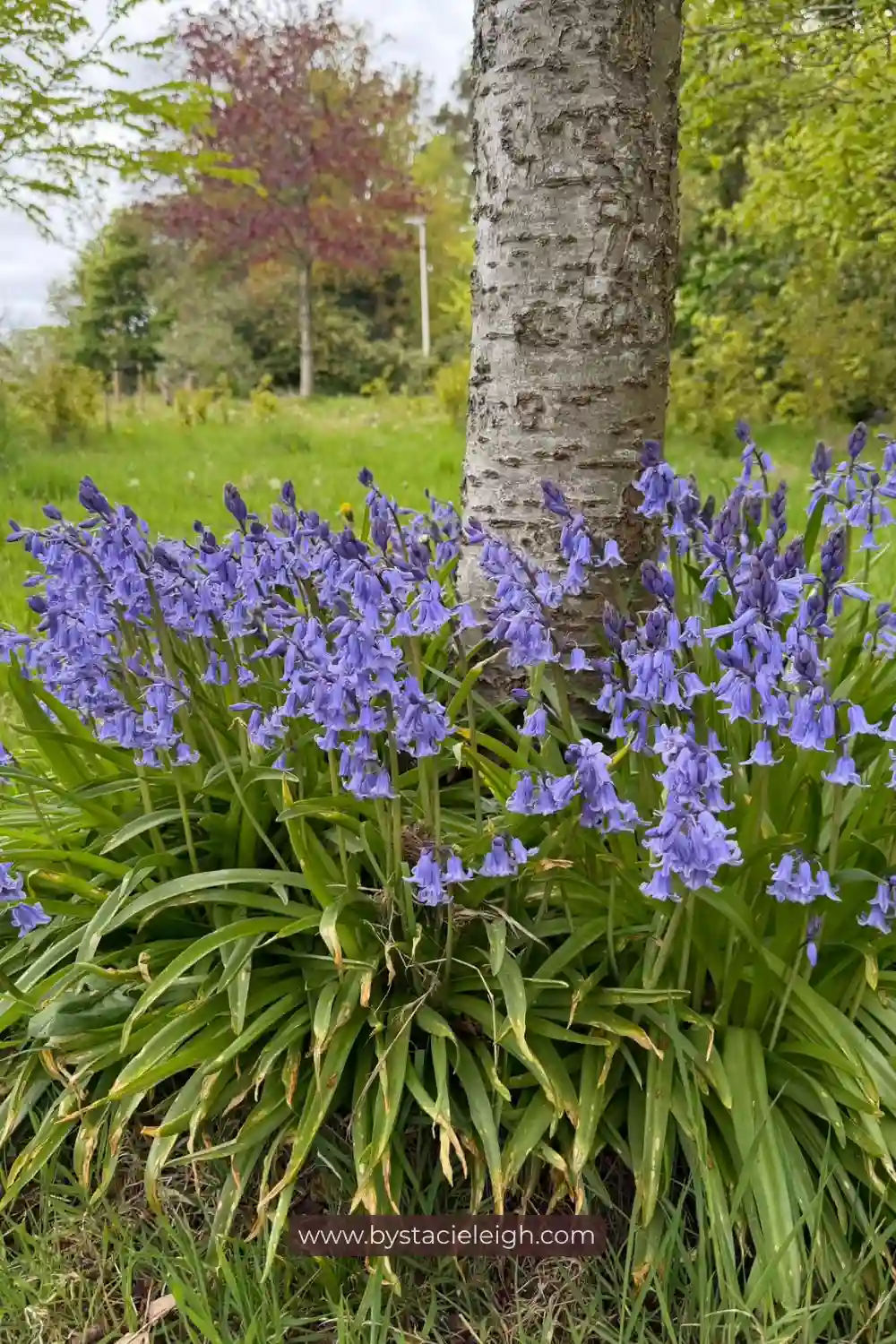
Native British Bluebells, Hyacinthoides non-scripta
The bluebells may be the most unmistakably British part of the entire garden.
Their violet blue flowers bend downward in soft arcs, carpeting the ground beneath trees and hedges in a way that feels almost untouched. Native British bluebells have a delicacy that photographs beautifully in Scottish light, softer and more natural looking than many cultivated garden flowers.
In Scotland they begin appearing properly in late April and continue through May depending on temperature and rainfall.
Lori’s photographs capture them exactly as they should be seen, not isolated in perfect flower beds, but growing through grass and woodland edges where they look like they belong.
Bluebell season is brief, which makes it feel more valuable. A week of warm weather can transform an entire woodland floor and then fade just as quickly.
If you visit Scotland in May, bluebells are one of the flowers most worth planning around.
The wild white flowers growing through the grass
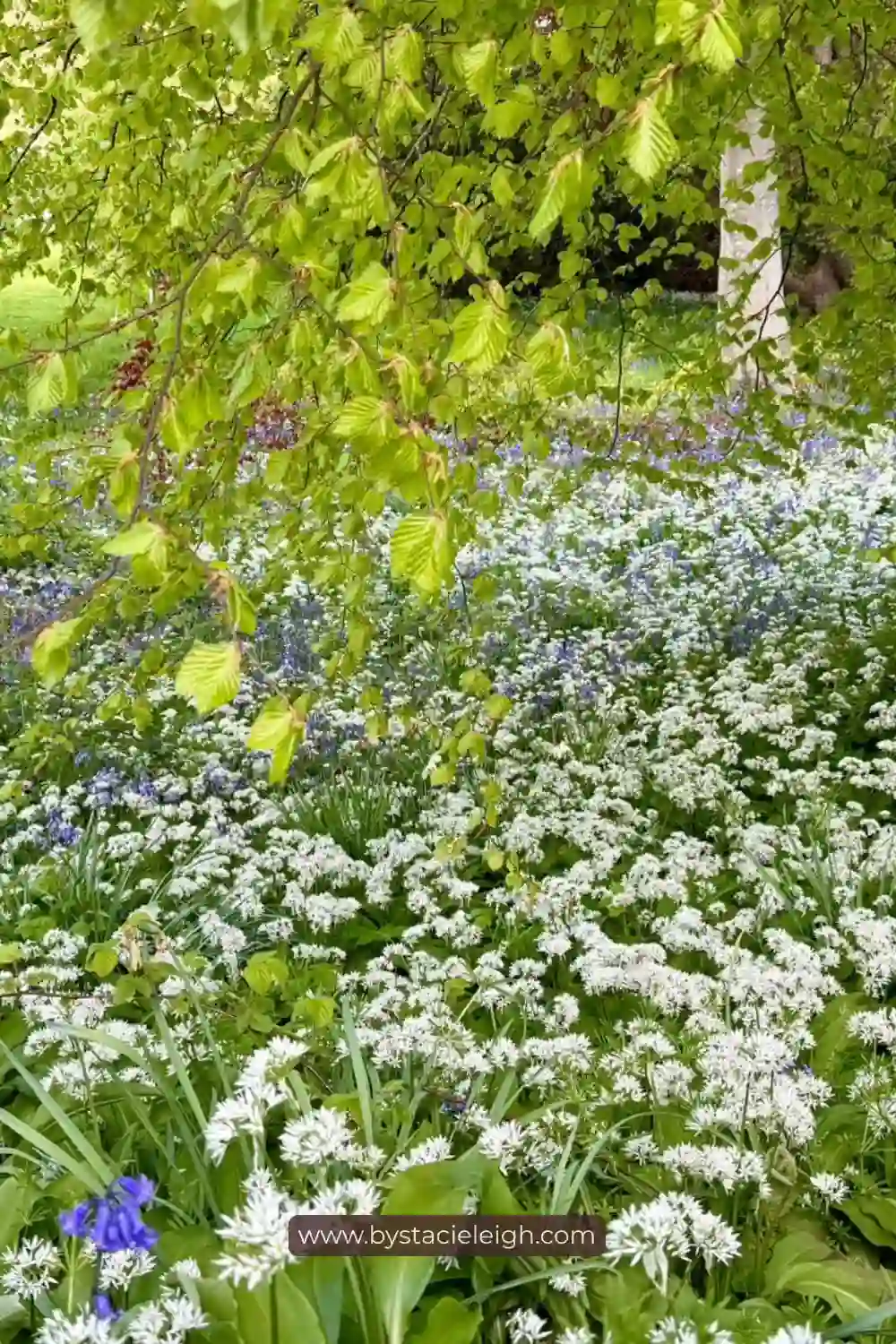
Greater Stitchwort, Stellaria holostea
Alongside the bluebells are clusters of delicate white wildflowers with narrow petals shaped like tiny stars. These are Greater Stitchwort, a native woodland plant commonly found growing through hedgerows and lightly shaded gardens across Scotland.
They are easy to overlook from a distance but beautiful close up.
The combination of bluebells and stitchwort is one of the most classic late spring scenes in Britain. The cool blue tones mixed with scattered white flowers create the soft woodland palette that defines May in Scotland.
This is another reason Scottish gardens feel different from highly manicured gardens elsewhere. Wildflowers are often allowed to stay. The edges are softer. Plants intermingle naturally instead of being separated into strict borders.
That slight untidiness is part of the beauty.
The saturated magenta azalea
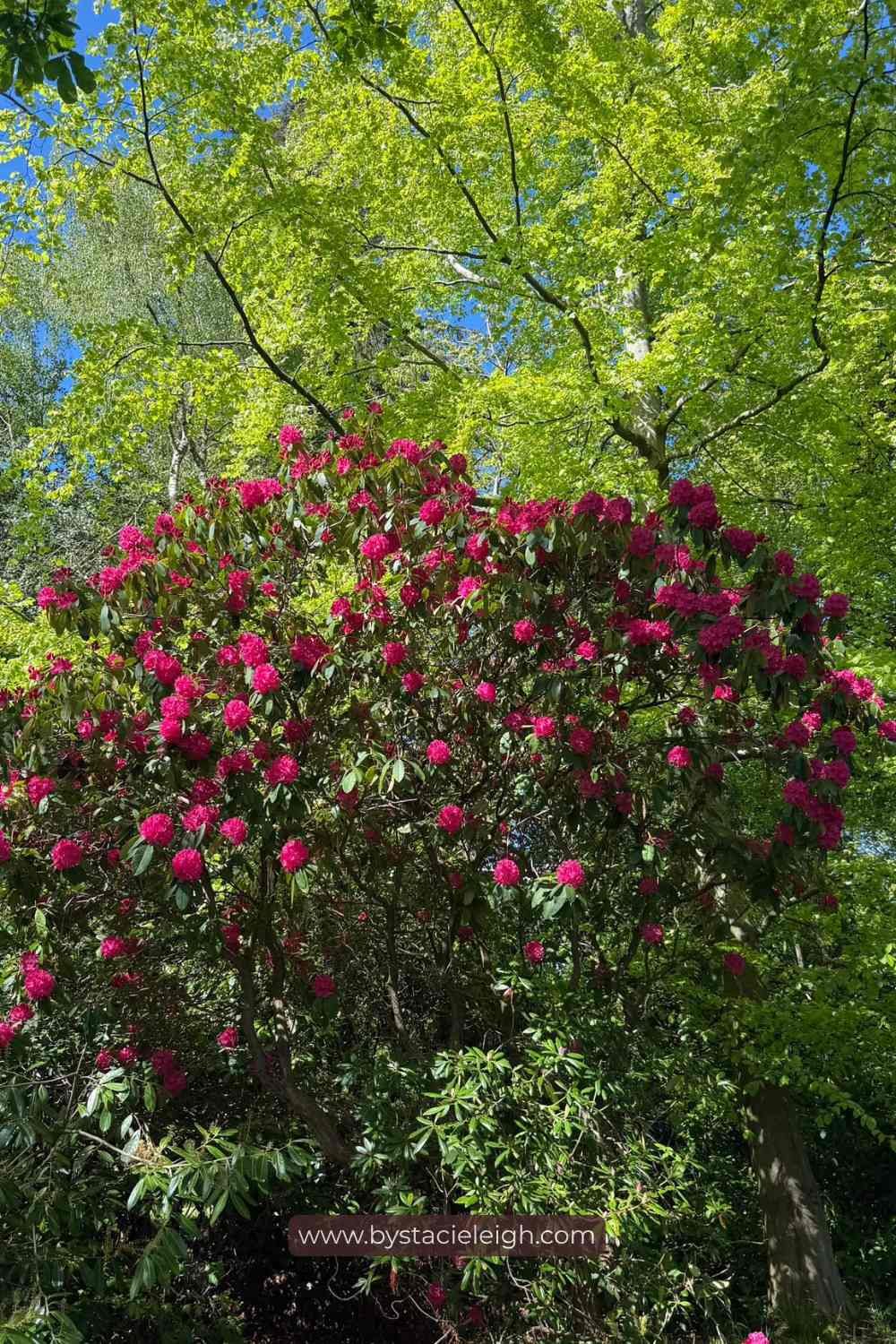
Azalea, part of the rhododendron family
The brightest colour in the garden this month comes from the azalea.
Dense clusters of intensely saturated magenta flowers almost completely cover the shrub, creating a burst of colour so strong it looks unreal against the muted greens surrounding it.
Azaleas belong to the rhododendron family and thrive under the same conditions:
- acidic soil
- cool temperatures
- regular moisture
- protection from harsh dry heat
In Scotland they often perform better than they do in warmer climates because the blooms last longer in cooler weather.
This is where Scottish gardens become unexpectedly vivid. People imagine Scotland in muted greys and greens, but late spring here can be intensely colourful for a few short weeks each year.
What Scottish gardens feel like in late spring
By June the light in Aberdeen changes completely.
Sunset stretches toward ten at night and the gardens hold colour long into the evening. Rain deepens every shade of green. Moss grows brighter on old stone walls. Flowers seem larger against the cool northern light.
There is also a looseness to Scottish gardens that makes them feel personal rather than overly designed.
Nothing is too polished.
Bluebells appear where they choose. Shrubs lean into pathways. Wildflowers grow through the edges of lawns. Granite walls collect moss and lichen over decades. The landscape always feels slightly older than the people tending it.
That atmosphere is difficult to recreate artificially.
It comes from weather, age, stone, moisture, and plants that have settled into the same ground for years.
Plants that thrive in a Scottish spring garden
If you want to recreate this style of garden at home, these are some of the plants that perform reliably in cool climates and cottage style gardens:
Berberis darwinii
An evergreen flowering shrub with bright orange blooms and dark spiny foliage. Excellent for wildlife gardens and informal borders.
Rhododendrons
One of the defining shrubs of Scotland. Best grown in acidic soil with partial shade and consistent moisture.
Native British Bluebells
Ideal for woodland style gardens and naturalised planting beneath trees.
Greater Stitchwort
A delicate native wildflower perfect for soft meadow style planting.
Azaleas
Compact flowering shrubs available in vivid pinks, oranges, reds, and whites.
Late Spring in a Scottish Aberdeen Garden Best places to see late spring flowers
If Lori’s garden has inspired you to visit Scotland during bloom season, these locations are especially beautiful between May and early June.
Crathes Castle Garden, Aberdeenshire
Known for its historic walled garden, sculpted yew hedges, and layered herbaceous borders.
Inverewe Garden, Wester Ross
One of the most unusual gardens in Scotland, famous for rhododendrons, exotic planting, and Gulf Stream influenced growth.
Benmore Botanic Garden, Argyll
Particularly spectacular for rhododendrons, azaleas, and woodland colour in late spring.
Dawyck Botanic Garden, Scottish Borders
Beautiful during bluebell season and one of the best places to experience large scale Scottish woodland planting.
Dunrobin Castle Gardens, Sutherland
Formal gardens overlooking the North Sea, especially vivid once late spring flowers begin appearing against the castle backdrop.
When Scotland is most colourful
March brings the first signs of spring.
April softens the landscape.
But May and early June are when Scotland becomes fully alive.
The gardens fill out, the roadsides turn bright with gorse and wildflowers, and the Highlands shift from winter brown to saturated green almost overnight.
Lori says this is the moment the country feels most itself.
Not the dramatic winter landscapes visitors expect, but the quieter beauty of flowers growing beside old stone walls while the light stretches late into the evening.
Read next
If you missed the beginning of the season, read the first part of Lori’s Scottish garden series:
First Signs of Spring, In a Scottish Aberdeen Garden
Snowdrops, crocuses, camellias, and the first flowers to appear after winter in northeast Scotland.